
How to design and install a walk-in shower: expert guide
Do you dream of designing a walk-in shower that is modern, spacious, stylish, and functional? Vente-unique offers you a complete guide including all the key steps to make your project a success, from choosing materials to installation. Follow our expert advice, learn about the common mistakes to avoid, and enjoy a bathroom that is aesthetic, elegant, and practical all at once!
Why choose to install a walk-in shower?
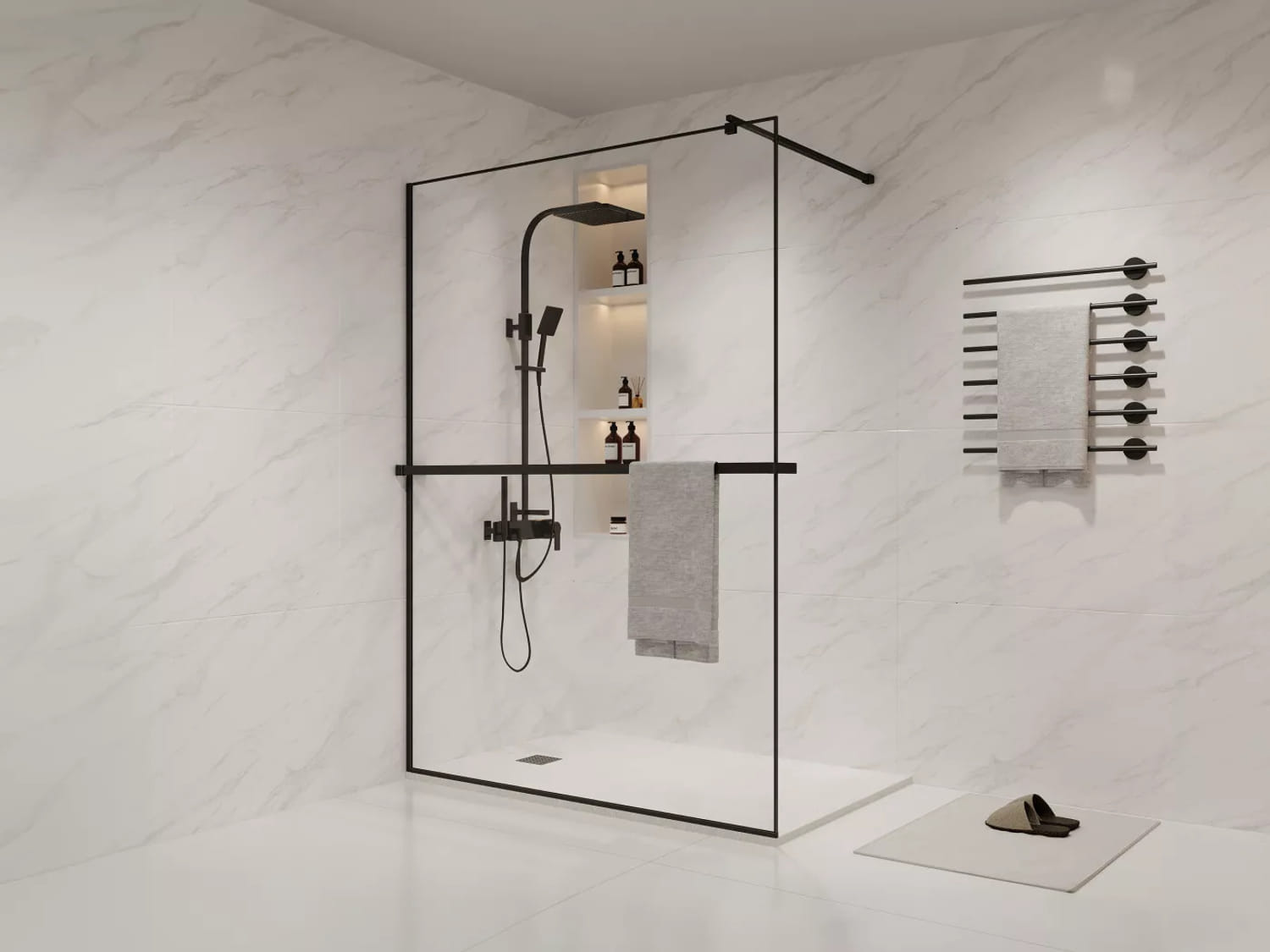
Designing a walk-in shower is becoming increasingly popular with homeowners. Why? We can start with its sleek and modern design. A shower of this style fits perfectly into any bathroom, whether contemporary or more traditional. Secondly, it is easy to access because, unlike classic shower enclosures, a walk-in shower is completely flush with the floor. Its design is ideal for children, senior citizens, and people with reduced mobility. Inside, you feel a true sensation of space. It is free of a standard shower tray or steps, which visually enlarges your washroom. Another point not to be overlooked is its simplified maintenance; fewer nooks and crannies mean a reduced risk of limescale and mould formation, which is a major benefit! Finally, it is a sustainable investment. A well-designed walk-in shower adds value to your property.
Elements to consider for a successful walk-in shower installation
To successfully carry out the layout of your walk-in shower, several essential factors should be considered.
A recessed tray or a tiled floor
The choice of shower flooring is decisive in the configuration of a walk-in shower. It must be adapted to the available space as well as your aesthetic preferences. Two possibilities are available to you: a recessed shower tray or a tiled floor with a sloped screed.
The first is practical and secure, allowing for a quick installation while guaranteeing optimal watertightness. It comes in different materials (resin, ceramic, acrylic) with non-slip surfaces for extra safety. The second, thanks to its highly aesthetic, custom-made solution, achieves a look that is completely integrated into the bathroom. Nevertheless, a tiled floor requires a slope of at least 2% to ensure proper water drainage.
- Good to know: Certain ready-to-install kits make it easy to create a sloped screed without requiring extensive masonry work.
The water drainage system
An efficient drainage system is indispensable for preventing water from stagnating. It ensures the optimal functioning of your walk-in shower. Two main solutions exist. The first, the classic waste trap, is ideal for small bathrooms and allows for a standard water flow rate. The second, the walk-in shower drainage channel, is more discreet, more efficient, and ensures rapid water drainage. It is better suited to spacious showers.
- Our advice: Choose a walk-in shower drainage channel with a stylish stainless steel grate or a tileable channel for a look that blends harmoniously with your shower floor.
Floor and wall coverings
For a walk-in shower that is both durable and safe, privilege waterproof, resistant, and non-slip materials, including:
- Non-slip tiling: Available in porcelain stoneware, natural stone, or mosaics, this material combines aesthetics with safety. Opt for a matte or textured finish to limit the risk of slipping.
- Polished concrete: Modern and sleek, it presents a smooth, uniform surface. However, be sure to apply a water-repellent treatment to prevent any porosity.
- Epoxy resin: This type of seamless, jointless covering is highly appreciated for its easy maintenance and impermeability. It also allows for personalisation with marbled or textured effects.
- Exotic wood: For a natural and warm touch, teak or ipé are perfect, provided a regular moisture treatment is applied.
- Wall tiles or porcelain stoneware: Must-haves in bathrooms, these wall coverings are easy to install. They come in numerous colours and patterns.
- Laminated or resin wall panels: An alternative to traditional tiles with a sleek look, these seamless panels are easy to clean.
- Natural stone: Marble, travertine, or slate bring a unique character to your walk-in shower. These materials require specific maintenance with suitable products.
- Lacquered glass or acrylic: A modern choice that reflects light, giving an impression of space while being simple to maintain.
The walk-in shower screen
A well-chosen walk-in shower screen prevents water splashes while preserving the sleek elegance of your bathroom. Depending on your needs, available space, and decoration style, several options are available:
- A completely open shower: This modern solution requires a spacious bathroom that is well-thought-out to avoid splashes. Its airy design gives an impression of space and fluidity. However, the floor must incorporate a sufficient slope to prevent water overflows. This configuration offers a true "spa" experience at home.
- A glass screen: Highly trendy, it brings a designer touch. It allows you to maintain brightness while protecting against water splashes. Available in different finishes (clear glass, frosted glass, smoked glass, screen-printed, or textured glass), a glass screen adapts to any atmosphere. It helps preserve your privacy if necessary. You can also choose a screen with a black metal profile for a highly fashionable industrial look.
- A glass brick wall: An original alternative, it combines aesthetics, elegance, and thermal insulation while letting light through. Its main advantage is that it preserves privacy while bringing a sensation of openness. This type of partition is particularly suited to bathrooms lacking natural light.
- A custom-made screen: Tailored to atypical layouts or small bathrooms, installing a custom shower screen answers space constraints perfectly. It can be paired with sliding doors to facilitate movement. Made of tempered glass or acrylic, it is manufactured according to specific dimensions to best fit the available space.
Walk-in shower taps and fittings
For your comfort within your walk-in shower, count on quality taps and fittings. The choice depends on several criteria such as ergonomics, design, and extra features:
- The classic shower column: Easy to install and often equipped with hydromassage jets, it strikes a good compromise between comfort and budget. High-end models integrate wellness features like massaging nozzles or multi-function hand showers.
- The concealed built-in shower: Elegant and refined, it conceals all connections behind the walls. Be careful, however, as its installation requires more complex work, requiring water outlets to be anticipated before laying the tiles.
- The XXL "rain" shower head: Ideal for a relaxing sensation thanks to a wide spray surface, it recreates an experience close to a tropical downpour. It can be fixed to the wall or ceiling, with models adjustable in intensity.
- The thermostatic mixer: It stabilises the water temperature, preventing sudden variations. It is highly suitable for families with children or people sensitive to temperature changes.
- Smart connected taps: Increasingly popular, they allow precise control of water flow and temperature via a mobile application or an integrated digital control panel.
Installation steps for a walk-in shower
To design your walk-in shower, proceed step by step:
- Prepare the space: Start by checking the feasibility of the project, the waterproofing requirements, and the drainage slopes.
- Install the base: Install the shower tray or create a sloped screed to check the efficiency of the drainage.
- Apply waterproofing: Integrate the membrane, resin, or waterproofing mat to prevent any leaks.
- Lay the coverings: Select and lay your wall and floor coverings. Apply the appropriate installation techniques to obtain an aesthetic and durable finish.
- Install fittings and screens: Finally, install the taps, shower head, and walk-in shower screen. Choose between a concealed or exposed shower column.
Mistakes to avoid when designing a walk-in shower
Common mistakes to avoid include neglecting waterproofing. A waterproofing defect in a walk-in shower can cause major structural damage. Watch out if you misjudge the space: a walk-in shower that is not spacious enough or poorly laid out can be highly uncomfortable. Do not forget ventilation, as the absence of an extractor fan (VMC) promotes mould growth. It is important not to choose unsuitable materials; flooring that is too slippery induces risks of slips and falls. Finally, take care not to underestimate your budget! It is advisable to plan a realistic budget for a walk-in shower layout (between 2,000 and 6,000 euros) depending on the choice of coverings, screen type, and fittings.
Designing a walk-in shower involves organisation, planning, and precision. Let yourself be inspired by current open shower trends and enjoy a space that is modern, practical, and pleasant on a daily basis. Ready to transform your bathroom into a relaxation area?
