
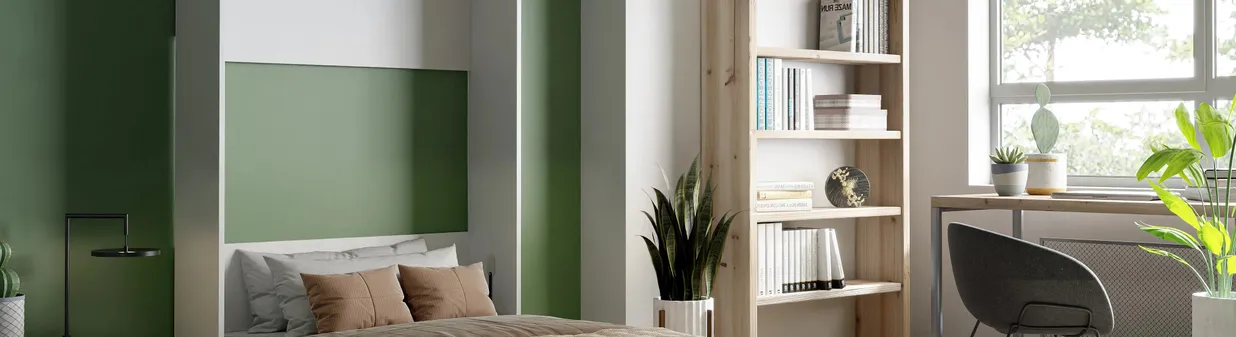
How to Arrange a Functional and Inviting Guest Room?
Welcoming your friends and family into a well-designed guest room means offering them a comfortable cocoon without sacrificing your daily life. To successfully plan a functional guest room, you need to anticipate sleeping arrangements, storage, circulation, and ambiance—especially if it was originally a multi-purpose room (office, playroom, dressing room). Well-chosen furniture helps to create a pleasant space suitable for short stays as well as longer visits.
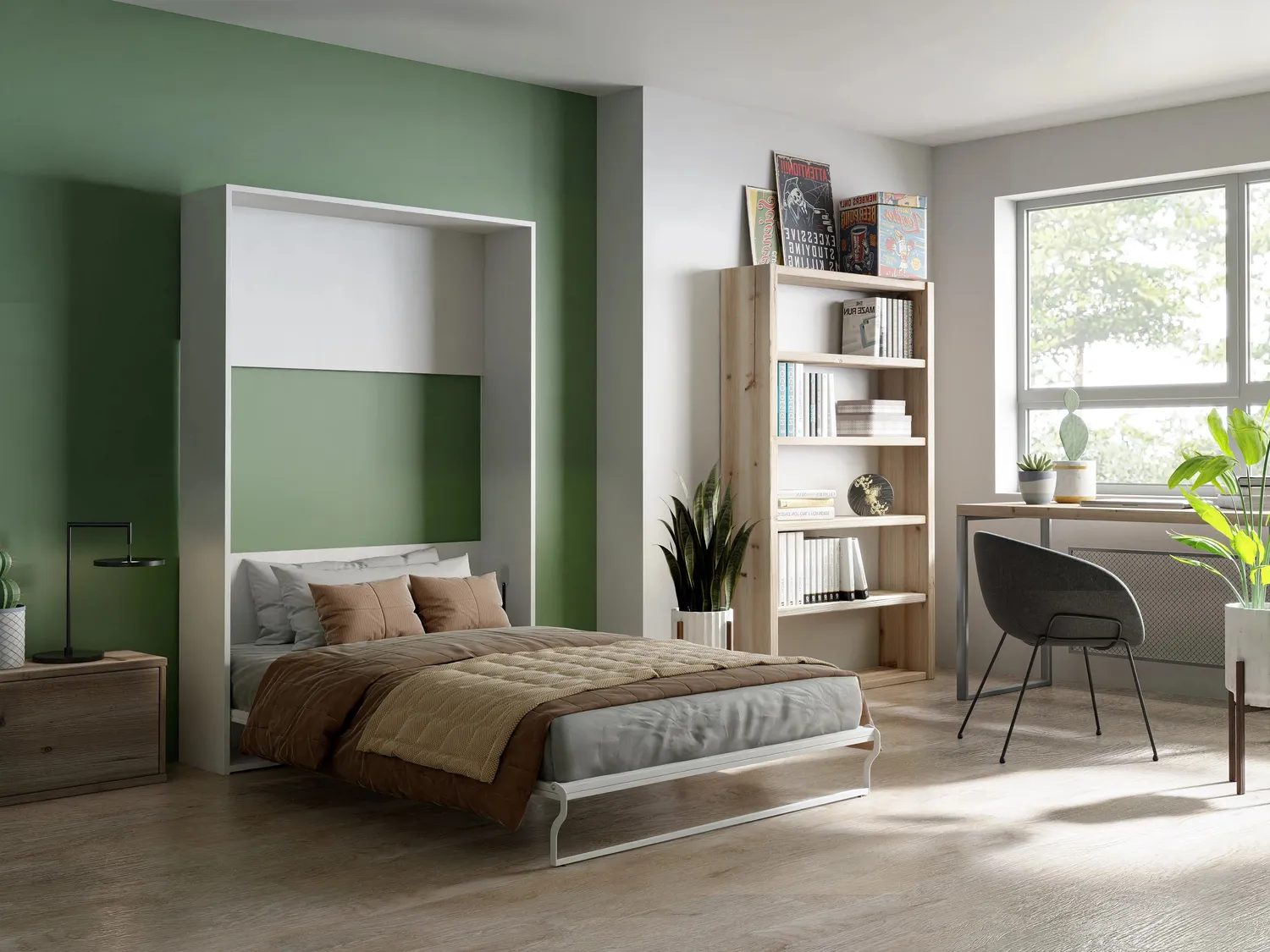
The primary lever to optimise the guest room involves choosing a space-saving bed, such as a Murphy bed that frees up the centre of the room during the day. This type of furniture transforms a classic bedroom into a flexible space, without compromising on mattress comfort or sleep quality. Complete it with some well-placed storage, ergonomic lighting, and practical touches (accessible power outlets, bedside table, comfortable seating) so your guests immediately feel at home.
Define the role of the guest room
Before choosing the smallest piece of furniture in a guest room, clarify the role of the room on a daily basis. A dedicated room, used exclusively for hosting, is not conceived as an office that is occasionally transformed into a bedroom. The more your needs are defined, the more coherent the layout will be.
To frame the project, you can notably:
- Think about the guests you receive most often (couple, friends, children, parents)
- Identify the main use of the room outside of visits (office, hobby, playroom)
- Assess the frequency of stays to adjust the level of comfort
In a dedicated room, a fixed double bed, a wardrobe, and more generous decoration easily find their place. In a guest room that is multifunctional, the main goal is to optimise the space by maximising floor clearance: fold-away bedding, built-in storage, and smooth circulation along the walls.
Choosing suitable sleeping arrangements to optimise the guest room
The bed structures the space and determines comfort. In a room of 9 to 10 m², a 140 x 190 cm bed remains a comfortable standard for two adults, provided that storage around is well managed. In a more generous room, a 160 x 200 cm bed is feasible if circulation remains unobstructed.
The fold-away bed is ideal for a multi-purpose room. It folds vertically against the wall and disappears into a cabinet that looks like a wardrobe or a bookcase. When in the closed position, it frees up several square metres, while still housing a genuine mattress measuring 140 x 190 cm or 160 x 200 cm. This allows for a real comfort zone. It can serve as a passage area, a reading corner, or a play zone, for example.
Another very effective option for arranging a guest room is the pull-out bed. In everyday use, it looks like a single bed (90 x 190 or 90 x 200 cm). A second sleeping surface is hidden in a drawer on castors, equipped with foldable feet. With just a few moves, it provides two real single beds or a double bed. This solution is ideal for small rooms or children's bedrooms that regularly host friends.
In summary, you can:
- Opt for a fixed bed if the room is dedicated to guests
- Choose a fold-away bed if the bedroom also serves as an office or a playroom
- Prefer a Murphy bed if you frequently receive children or friends alone
- Reserve the sofa bed for very constrained spaces, ensuring the quality of the mattress
Whatever the configuration, opt for bedding with a slatted bed base and a mattress of around 18 cm thickness to ensure comfortable support, even over multiple nights.
Structure the space for a functional guest bedroom
A guest room that is functional is characterised by its smooth circulation and well-defined zones: a sleeping area, a storage zone, and, if needed, a workspace. Even within just a few square metres, this organisation remains achievable by making the most of the walls and ceiling height.
Install the bed so that at least 60 cm of clearance is maintained on one side, or even both, to facilitate access and cleaning. Place large storage units (wardrobes, chest of drawers) against a solid wall, ensuring they do not obstruct the door opening or access to the windows. In a small bedroom, vertical storage solutions, such as a wardrobe with sliding doors or wall-mounted shelves, free up the floor space while providing a considerable capacity.
If the room also serves as an office, position the desk against a wall to avoid blocking the opening of the drop-leaf bed or the drawer of a trundle bed. A comfortable yet space-saving chair can also be used for sitting to put on shoes or to place a bag. The goal is a clear and intuitive space. Your guests will immediately understand where to put their belongings without moving the furniture.
Choosing storage and furniture for a guest bedroom
Your guests do not need a full wardrobe, but they should be able to store their clothes and personal belongings. The ideal guest room furniture remains practical, compact, and versatile.
To cover essential needs, you can:
- Plan a compact wardrobe with a hanging section and some shelves
- Install a chest of drawers or dresser for longer stays
- Add wall shelves for books, baskets, and storage boxes
- Incorporate a bench-boot for luggage
A wardrobe with a half-column hanging space (usable height of approximately 120 to 140 cm) allows you to hang shirts and jackets, while the shelves accommodate folded clothes. Remember to leave free hangers and some empty storage space. This detail immediately creates an impression of hospitality.
Create a warm and relaxing atmosphere
The atmosphere of a guest room heavily depends on colours and materials. A soft palette, combining neutral tones (beige, linen, pearl grey, off-white) with a few bolder accents (navy blue, sage green, terracotta), promotes relaxation. These shades can easily be echoed in bedding, cushions, or curtains.
Textile plays a key role. A cotton bed linen or in washed linen, generous pillows and a cosy blanket at the foot of the bed immediately create a comfortable image. A soft rug at the foot of the bed is appreciated, especially if the floor is a bit cold. A few frames, an easy-care plant, and a headboard with good proportions are enough to personalise the room without overloading it.
Work the light for greater comfort
Lighting plays a significant role in wellbeing. The ideal is to combine a soft general light, a reading light near the bed and, if needed, dedicated lighting for the desk.
For comfortable lighting, you can:
- Install bedside lamps or wall lights on each side of the bed
- Choose warm light bulbs for a soothing atmosphere
- Add an adjustable desk lamp if the room serves as a workspace
- Include blackout curtains or a blind to regulate the brightness
To conclude, the arrangement of a guest bedroom depends on achieving a balance between comfort, practicality, and conviviality. By choosing suitable bedding such as a fold-away bed or a trundle bed, selecting each piece of furniture for the guest room carefully, and working on the lighting, storage, and small details, you create a flexible, welcoming space ready to host your loved ones at any time.
