Designing a narrow balcony without sacrificing comfort
A narrow balcony is not a fatality. With thoughtful layout and well-chosen furniture, it becomes a real outdoor relaxing haven. Whether it's a small balcony in the city or a long loggia, a few tips can transform each square metre into a pleasant and functional space. From the very first furniture choices, such as a garden lounge, comfort and aesthetics should guide all deliberation.
Optimise every centimetre of your narrow balcony
The key to a well-designed balcony lies in space management. A successful balcony layout begins with analysing precise measurements: width, length, height of the balustrade, and exposure. On a surface of 1 to 1.5 metres wide, it is essential to favour shallow, foldable, or modular balcony furniture.
To make full use of every available centimetre, a few simple but effective choices can transform the balcony into a true living space:
- Choose wall-mounted folding tables to free up circulation space
- Prefer lightweight wooden or metal folding chairs that are easy to store
- Adopt benches with built-in chests to combine seating and storage
- Install suspended shelves rather than floor-standing furniture.
These solutions allow you to keep an open area suitable for relaxing moments. For example, a round table with a diameter of 60 cm is enough to create a dining corner without obstructing the walkway, while a folding stool can easily slide behind a planter.
Relying on the right choice of balcony furniture
Furniture plays a major role in the sense of space. On a narrow balcony, the aim is to create an impression of visual lightness. A minimalist garden lounge, designed for small terraces, combines comfort and compactness.
The materials to prioritise vary depending on the exposure:
- For a south-facing balcony, thermolacquered metal and textilene are more resistant to UV
- On a north-facing facade, oiled exotic wood or synthetic rattan preserve the visual warmth
- Aluminium structures provide modernity and simplicity while allowing easy cleaning.
A small low armchair accompanied by a 40 cm diameter side table creates an ideal relaxation space for morning coffee. For a lounge effect, two woven fibre poufs can replace traditional chairs while emphasising the cosy character of this mini space.
Design a Friendly Dining Area
To fully exploit this verticality while maintaining a friendly space for meals, it is advisable to complement your layout with a garden dining set compact and some well-thought-out wall solutions.
The trick is to choose appropriate shapes and proportions:
- A 70 × 70 cm square table can accommodate two to four guests without obstructing movement
- Folding or stacking chairs minimise clutter after the meal
- A light linen tablecloth and colourful cushions enhance the feeling of visual comfort.
To prevent the space from appearing too cluttered, favour neutral tones such as light grey, beige, or sand, and introduce colour through small accents in textiles or accessories. You can also opt for a table with a central pedestal, which offers more freedom of movement than a double base.
Enhance comfort through textiles and lighting fixtures
On a small balcony, comfort doesn't depend solely on the furniture. Accessories play a vital role in creating a warm atmosphere. Textiles soften contact with rigid surfaces. Lighting fixtures, for their part, sculpt the space as night falls.
A few well-chosen details are enough to transform the balcony into a real relaxation corner:
- Add waterproof fabric cushions for long-lasting use
- Place a lightweight throw for cooler evenings
- Hang an LED garland or install solar lanterns for soft lighting
- Lay a polypropylene outdoor rug to visually define the seating area.
Each element helps make the balcony more welcoming and comfortable. Natural textures, such as jute or cotton, add an authentic touch, and technical materials (wood, steel, aluminium...) ensure easy maintenance.
Enhance verticality to clear the ground
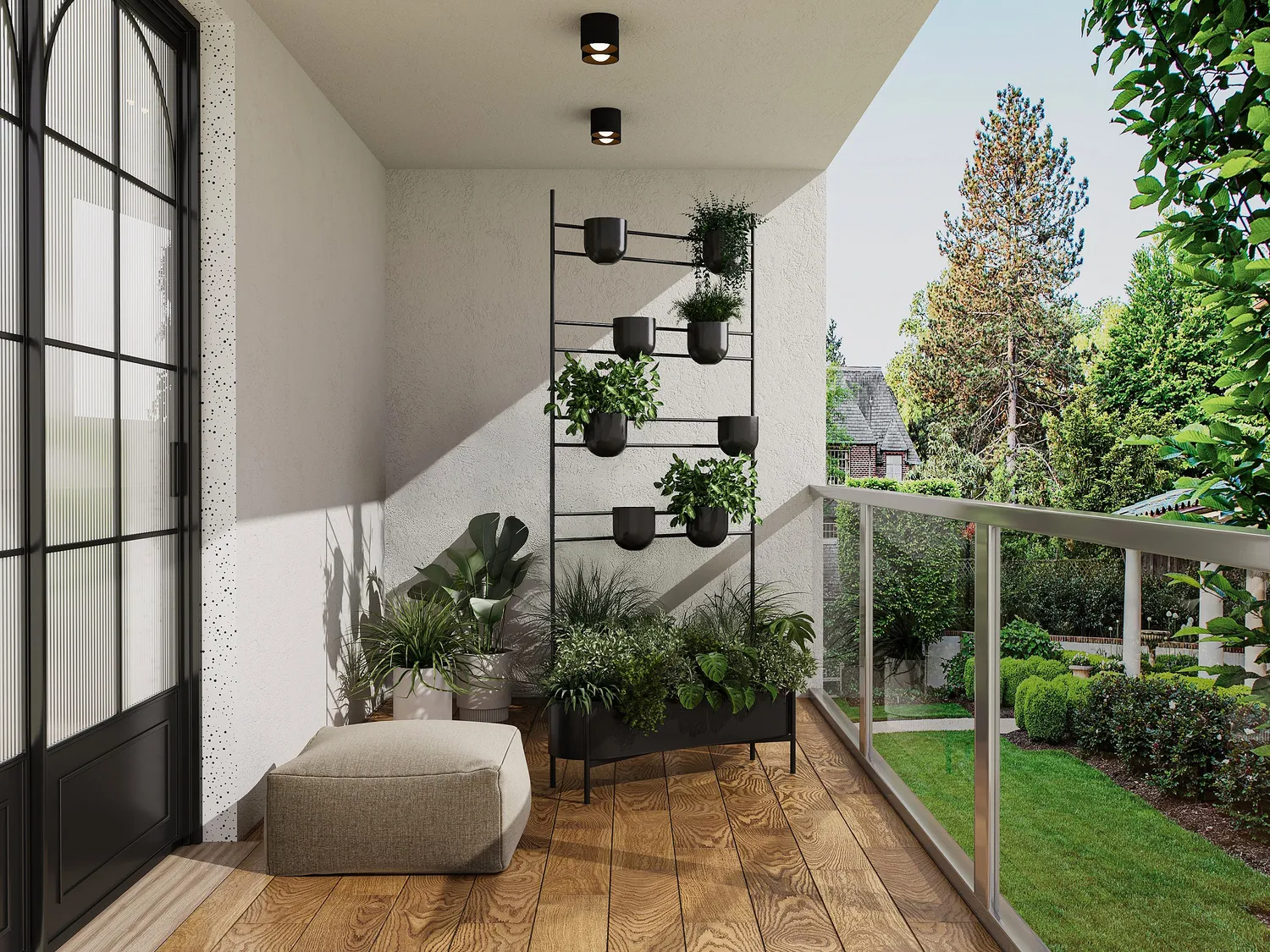
When the floor lacks space, the walls and rails become valuable allies. Exploiting verticality is an essential strategy for any narrow balcony layout.
Some simple adjustments allow for the use of the walls and the guardrail without cluttering the floor:
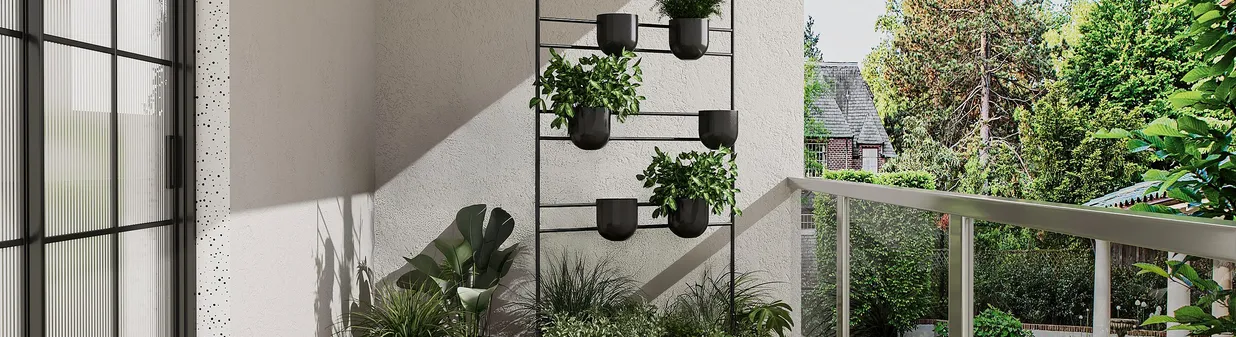
- Secure planters onto the railing to preserve the ground surface
- Hang suspended pots in macramé for an aerial plant effect
- Install lattice panels to allow plants to climb or to hang accessories
- Place a wall-mounted shelf with three levels for herbs or decorative objects.
This verticality search allows for introducing greenery and personality without compromising the flow of circulation. A composition of trailing plants, such as ivy, wandering jew, and verbena, provides visual depth that optically enlarges the surface.
Create a leafy, calming atmosphere
A narrow balcony can become a miniature garden. The combination of carefully selected plants creates a relaxing atmosphere while contributing to comfort.
Prefer plants suited to the light conditions:
- For a balcony exposed to the sun : lavender, rosemary, geranium, euphorbia ;
- For a shaded area : ferns, hostas, begonias, impatiens ;
- For small spaces : hanging plants or in narrow window boxes.
The plant-based rhythm enhances the sense of intimacy and softens the noises from the street. You can also add a bamboo or synthetic fibre privacy screen to create a protective cocoon. The idea is to make the balcony an extension of the living room, a place where you can relax, surrounded by greenery and light.
Play with perspectives to visually enlarge the space
Colours and lines strongly influence the perception of a small balcony. Light shades reflect light and visually enlarge surfaces, unlike well-constructed perspectives that give a sense of depth.
- Paint the back wall in a light or slightly satin finish
- Use accessories with rounded shapes to soften the angles
- Lay the wooden floorboards along the longest side to create a visual extension effect
- Introduce an external mirror to capture natural light.
These simple tricks play with the illusion of space by highlighting every architectural detail. In the evening, a few candles placed strategically reinforce the sense of intimacy and enhance the softness of the setting.
Think of the balcony as a room in its own right
A successful balcony layout relies on a comprehensive approach. Considering it as a simple extension would be overly simplistic. It is better treated as a genuine outdoor living space. Even narrow, it can serve as a reading corner, dining area, or small urban garden.
delimit the areas according to your uses :
- A relaxation area with a armchair and a small sofa
- A dining corner equipped with a small table and two chairs
- A green zone with ornamental or aromatic plants.
Combining these three functions into a coherent harmony transforms your balcony into a haven of peace. A modular approach allows for adjusting the layout according to the seasons. In summer, colourful textiles and abundant plants; then in winter, a lighter and simpler decor to maintain brightness.
The balance between comfort and freedom of movement
On a small balcony, every item matters and comfort should never hinder movement. Good layout involves maintaining at least 60 cm of free space to move easily. Double-purpose furniture (bench-storage, foldable table, storage stool) offers flexibility and practicality.
To enhance the sense of space, opt for airy shapes: slender supports, perforated materials, lightweight textiles. A well-designed balcony naturally invites you to spend time there, without ever causing visual discomfort or a feeling of suffocation.
Transforming a 3 m² balcony Let's take the example of an urban balcony measuring 1.2 m x 2.5 m. The owner wishes to create a dining corner and a relaxation space. Here is an optimal layout:
Result? Despite the limited space, comfort, functionality, and aesthetics blend harmoniously. The balcony becomes a pleasant living space from morning to evening. |
The Art of Thoughtfully Simple Design
Having a Narrow Balcony requires a certain aesthetic discipline. Choose few elements, but choose them well. Each piece must be beautiful, useful and proportioned. Visual sobriety enhances light, greenery, and materials.
With a garden lounge adapted, a few hanging plants, and a foldable table, the space becomes a personal oasis where every detail contributes to well-being. The success of a balcony renovation is measured less by its size than by its ability to provide a pleasant break in daily life.