Choosing the Right Kitchen Sink: The Complete Guide
Choosing a kitchen sink is not just about selecting a simple basin for rinsing dishes. It is a central work area that influences daily comfort, the flow of motions, and the overall aesthetics of the room. A well-sized model, tailored to your furniture and made from a material consistent with your culinary habits, will prevent a constantly wet worktop or a fragile, hard-to-maintain basin. From the very first considerations, you can browse through the different shapes and finishes of sink to see how it would look in your layout.
How to set the right size of sink for your kitchen
The first step is to check the available space on the worktop and the width of the unit under the sink. Also consider the height beneath any potential window, as these elements determine the size of the bowl and the ease of opening the doors.
A sink that is too large encroaches on the preparation surfaces, whereas a too small model makes washing pots less practical.
Next, three major families of dimensions for a kitchen sink are distinguished:
- The compact small sink, approximately 40 to 60 cm long and 15 to 17 cm deep, perfect for a kitchenette or a supplementary water point
- The standard sink, between 70 and 100 cm long and 18 to 20 cm deep, suitable for most households with a single or twin basin
- The XXL models, exceeding 110 cm in length and 20 to 22 cm deep, often equipped with a double basin or a generous basin with drainer, ideal for large families and avid cooks.
The Depth of the Tank also deserves your attention. A deeper basin makes cleaning the stockpots easier, provides more volume for the dishes, but it requires you to bend down more, which can be inconvenient for people prone to back pain.
Choose the number of basins: single, small sink, or double-basin sink
The choice between a single bowl, a double bowl sink, or an intermediate configuration primarily depends on the size of the kitchen, the presence of a dishwasher, and your cooking habits. An undersized sink quickly gives an impression of clutter or lack of practicality.
Depending on the configuration of your kitchen and your equipment, various options are available to you :
- A single-basin kitchen sink is well suited to small spaces and households equipped with a dishwasher, as its main purpose is to rinse food or a few utensils. However, it may be just adequate for washing multiple saucepans at once, especially if the bowl remains shallow
- Conversely, a double-basin sink offers great flexibility. One basin can hold soapy water and the other for rinsing, or separate washing from soaking
- The one-and-a-half basin configuration, with a main bowl and a small secondary sink, makes for an interesting compromise when the cabinet width allows
- In very compact kitchens, a small half-bowl type sink fits into a limited space while providing the essentials: rinsing fruits and vegetables, quick dishwashing of a few glasses, or occasional hand cleaning. It is often used as a supplement to a dishwasher and is well suited to outdoor kitchens.
Remember to check the compatibility with the under-sink kitchen unit. A two-basin sink typically requires an 80 cm wide unit, whereas a single model can be accommodated in a 60 cm unit.
Properly selecting the material: stainless steel, ceramic, resin, stone, concrete or glazed gres
The material determines the aesthetic of the kitchen sink but also its durability, its noise level, and ease of maintenance. It should match the work surface, withstand thermal shocks, and resist scratches, especially if you regularly use heavy utensils.
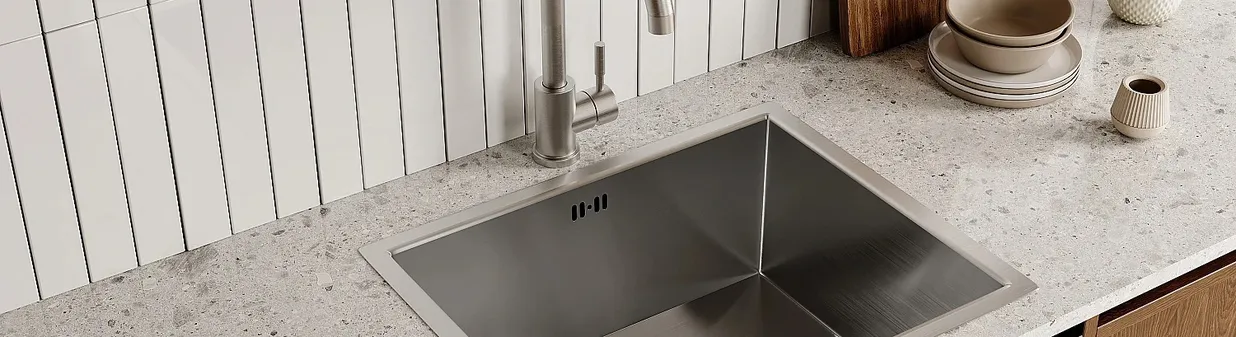
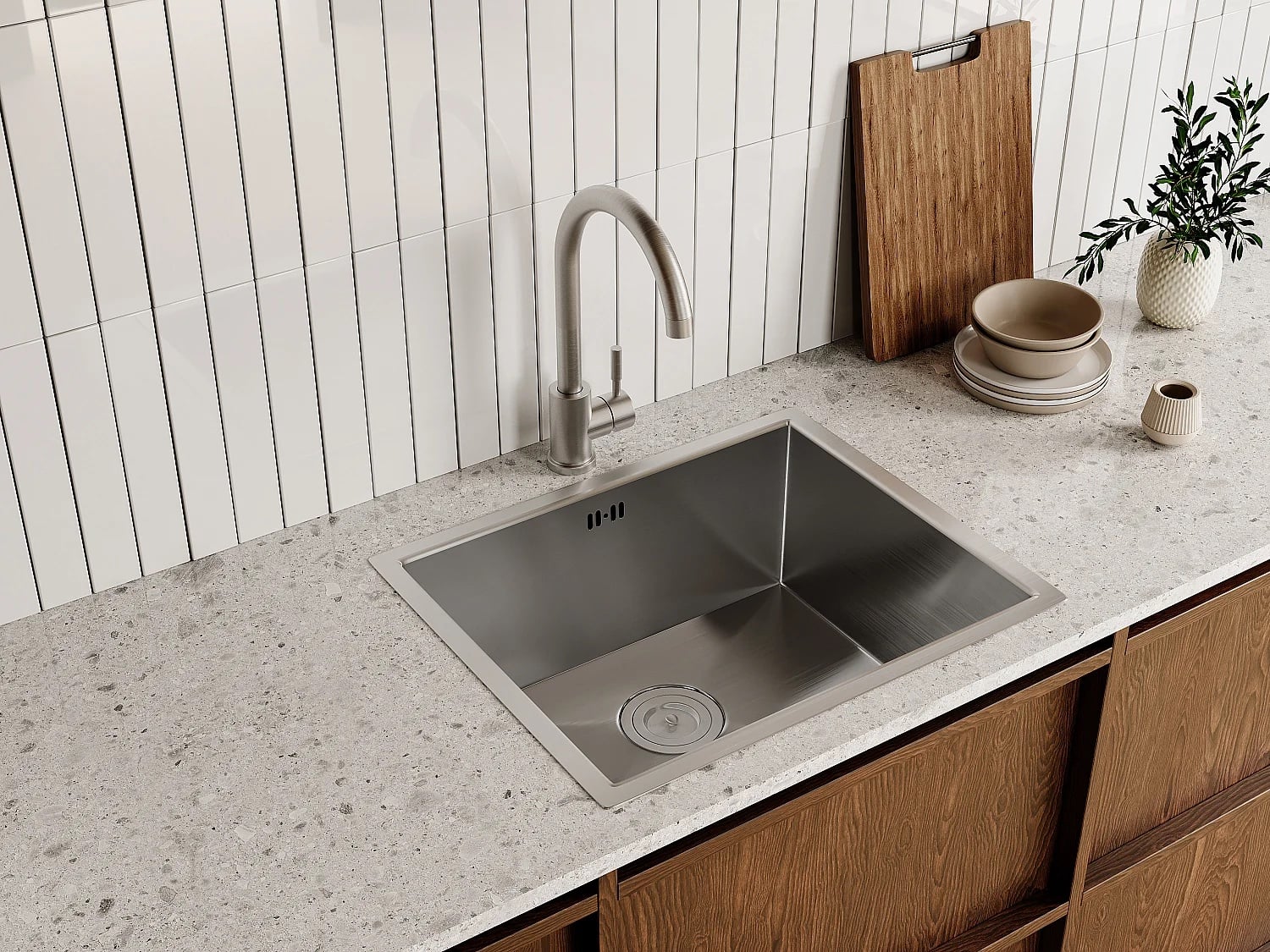
- The stainless steel sink remains a classic choice thanks to its excellent hygiene, lightness, and corrosion resistance. It withstands impacts well, is easy to clean, and fits just as well in a contemporary kitchen as in an industrial setting. To minimise micro-scratches and the noise of dishes, it’s better to choose a stainless steel sink of good thickness or with an anti-scratch coating.
- The ceramic sink appeals with its shiny appearance and sometimes retro lines. Very resistant to high temperatures, it easily handles dishes straight from the oven but requires a sturdy cabinet due to its weight.
- The resin sink, made from mineral fibres and synthetic binders, offers a contemporary and affordable alternative. It comes in many colours, easily matches the worktop, and shows good impact resistance when quality is high. However, lower quality resins can fade, stain, or suffer from excessive heat.
- For a very natural look, the stone or concrete sink is a characterful option: these solid materials create a striking focal point but require a suitable supporting structure, regular maintenance, and sometimes a hydrophobic treatment.
- The enamelled gres sink, close to ceramic, combines a smooth surface with good impact resistance, making it ideal in a traditional setting.
Type of installation: surface-mounted sink or built-in sink?
Once the format and material are defined, the next step is to determine the installation method, which affects both the aesthetics and the ease of cleaning around the sink. The two main categories are the drop-in sink and the inset sink, with some variations such as the under-mount sink.
- Drop-In Sink forms a unit that replaces the worktop across the width of the cabinet. Its rims fully cover the top part of the base unit, simplifying installation and reducing the need for cuts. This type of fitting is well-suited to kitchens comprising modular units, especially when renovating the sink corner without replacing the entire worktop. The ceramic drop-in sink with visible facades perfectly illustrates this style, which is appreciated in country kitchens.
- Undermount Sink, more common, requires a precise cut into the worktop to insert the bowl from above. Its rim is flush with or slightly rests on the surface, creating a discreet line and visual continuity with the surrounding material. In a modern kitchen, a resin or stainless-steel undermount sink blends very well with laminated or solid wood worktops. You can also choose a semi-recessed model, most often stainless steel, with edges fixed underneath the worktop for a very sleek look and particularly easy cleaning.
Consider ergonomics, accessories, and maintenance
Beyond the choice of the sink, certain ergonomic details truly transform everyday usage. The presence of a drainer, an adaptable chopping board, or a sliding basket adds extra work surface and makes organisation around the water point easier. Also check the position of the plug and overflow, especially if the existing drain cannot be easily moved.
For optimal comfort, consider the combination between the sink, the mixer tap, and the kitchen unit. A high or pull-out spray mixer tap makes rinsing large containers easier, but it should remain proportionate to the depth of the bowl to limit splashes. The under-sink kitchen unit must provide enough space for the siphon, water inlets, and possibly a recyclables sorting system. It must also comfortably support the weight of a ceramic, stone, or concrete sink.
Maintenance is heavily dependent on the selected material. The stainless steel sink is simply cleaned with a non-abrasive sponge followed by a mild product, rinsed and dried to limit limescale marks. Ceramic and enamel sandstone withstand common household cleaners well, but it is better to avoid direct shocks with very hard objects to preserve the enamel.
Resin or stone sinks sometimes require specific products and regular maintenance to keep a uniform surface. Some models need periodic application of a hydrophobic treatment or a protective polish.