
Velvet sofa: how to embrace it?
Choosing a velvet sofa instantly transforms the atmosphere of a living room. With its silky feel, changing sheen and ability to catch the light, it makes a statement as elegant as it is inviting. From the earliest stages of furnishing, it deserves particular attention, especially if you are exploring the available designs, such as this velvet sofa, which perfectly illustrates the diversity of today’s styles.
Why choose a velvet sofa?
Velvet captivates with its visual richness and enveloping comfort. Unlike flat fabrics, it has a dense texture that plays with the light, creating subtle variations depending on the direction of the fibres. Beyond aesthetics, the velvet sofa offers tangible benefits:
- A soft feel that improves seating comfort, particularly on models with a foam density of between 30 and 35 kg/m³
- Good resistance to wear when made from synthetic fibres such as polyester
- An ability to conceal minor irregularities or creases thanks to its textured appearance
In a small interior, this type of covering immediately adds character without the need to multiply decorative elements.
Choosing the right colour for your velvet sofa
The colour plays a decisive role in integrating the sofa into your space. It influences the perception of proportions and the overall atmosphere.
The green velvet sofa: a timeless choice
The green velvet sofa is part of a lasting trend. It evokes nature while remaining sophisticated. In a living room with white or cream walls, it becomes a focal point without overwhelming the space. Pair it with:
- Natural materials such as light wood or rattan
- Brass metal accents to enhance elegance
- Neutral textiles such as linen or unbleached cotton
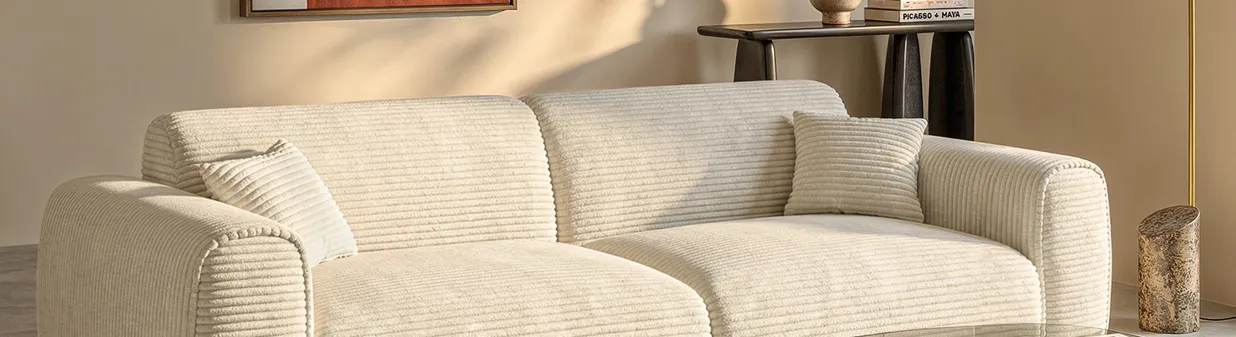
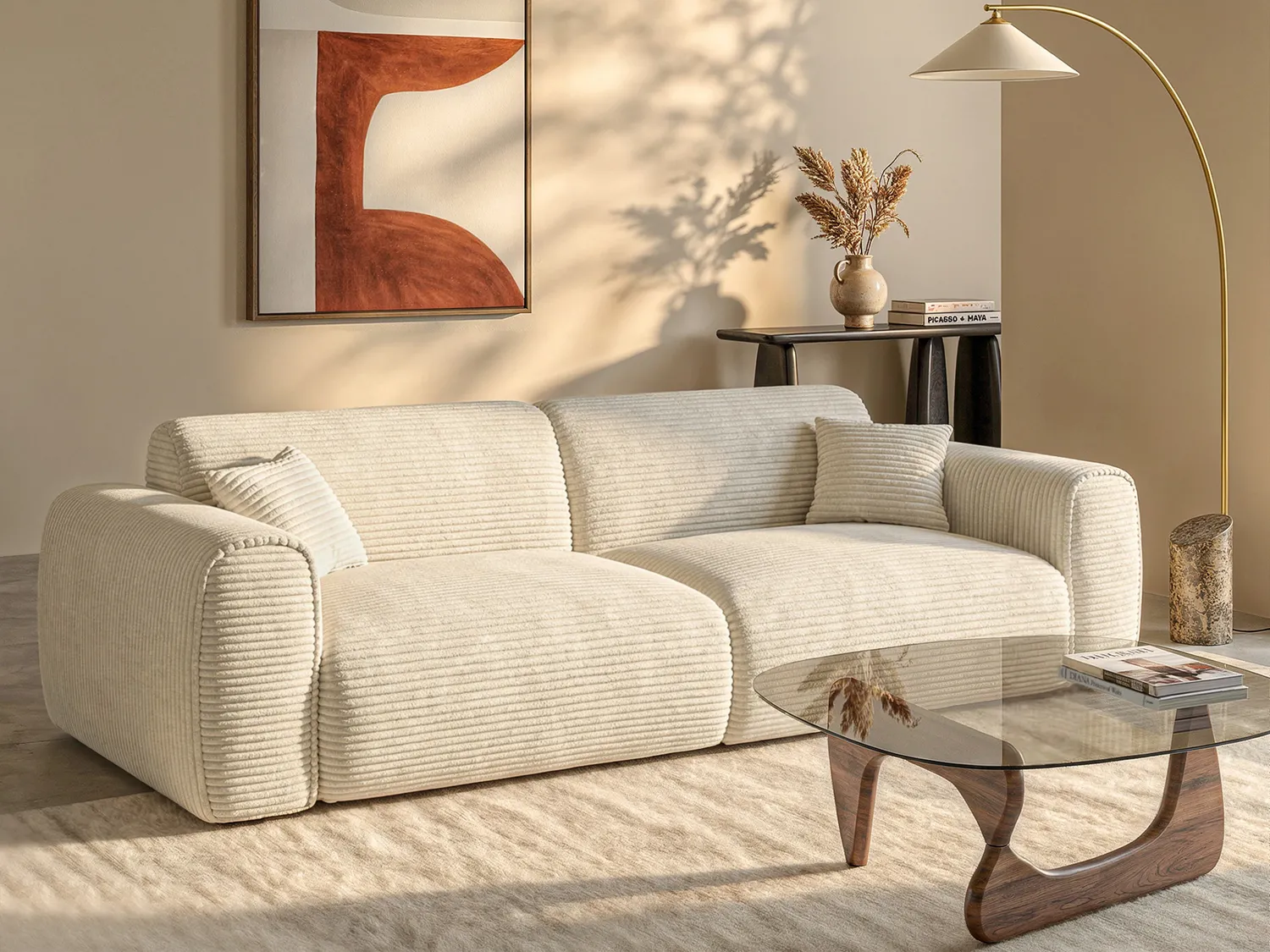
The beige corduroy sofa: softness and modernity
The beige corduroy sofa offers a bright and soothing alternative. Its raised texture adds visual rhythm while maintaining a soft palette. This type of model is particularly suitable for:
- Small spaces, as it reflects light better
- Minimalist interiors where every decorative detail makes a difference
- Scandinavian or contemporary settings
With a seat depth of approximately 55 to 60 cm and a seat height of around 45 cm, this type of sofa ensures everyday comfort while maintaining a light profile.
Which shape should you choose for your space?
The choice of shape depends directly on the layout of your living room and the way you move around it every day. A model that is too deep or too long can obstruct the passage, block access to a patio door or make the room appear visually cluttered, while a sofa that is too small may get lost in the space and seem insignificant. The aim is therefore to find a size that structures the room, defines the relaxation area and leaves enough open space to move around the velvet sofa without having to constantly go around the furniture.
- The straight sofa, understated simplicity : a straight model seating 2 to 3 people and measuring between 160 and 220 cm in length is perfectly suited to smaller spaces. It helps structure the room without making it feel cramped.
- The corner sofa, enhanced sociability : with a total length of up to 260 to 300 cm, the corner sofa optimises living areas. It is suitable for open-plan or family living rooms.
- The modular sofa, maximum flexibility : meets the changing needs of everyday life. Made up of independent modules, it allows you to reconfigure the space according to how it is used, add or remove elements depending on the available floor area, and quickly adapt the layout when entertaining guests. This type of sofa is particularly relevant in urban flats, where every square metre must be used intelligently.
- The sofa bed, style and functionality : the velvet sofa bed combines elegance and practicality, as it converts into an occasional bed without compromising on style. Recent models feature a mattress 10 to 14 cm thick, a quick-opening mechanism—often taking less than ten seconds—and a sleeping width of between 120 and 160 cm, making them particularly suitable for studios or homes with an occasional guest bedroom.
As part of a comprehensive approach to planning your space, it is also advisable to explore the different sofa options in order to compare the formats and features available.
How to incorporate a velvet sofa into your décor?
Integrating a velvet sofa relies on a balance between materials, colours and proportions. It is not simply a matter of adding it, but of creating a cohesive arrangement around it.
Harmonise materials
As velvet is a visually rich material, it benefits from being paired with complementary textures.
- Raw or solid wood to create a warm contrast
- Black or gold metal to structure the space
- Glass to visually lighten the overall look
Play with textiles
Cushions and rugs help reinforce the sofa’s identity without overloading it.
- Bouclé wool cushions to enhance comfort
- Cotton throws for a relaxed touch
- Geometric-patterned rugs to energise the space
Mastering lighting
Velvet reacts strongly to light. Thoughtful lighting will enhance its sheen.
- Warm-light accent lamps (2700K)
- Pendant lights positioned above the seating area
- Wall lights to create subtle plays of shadow
Velvet care and durability
Contrary to popular belief, velvet is not difficult to care for. Modern versions are designed to withstand everyday use. A few simple steps can help preserve its appearance:
- Vacuum regularly with a soft brush to prevent dust build-up
- Brush the fabric in the direction of the fibres to maintain its uniformity
- Clean stains immediately with a slightly damp cloth
For intensive use, opt for a synthetic velvet with a Martindale abrasion resistance rating of over 25,000 cycles, ensuring good durability over time.
Create a cohesive look around the velvet sofa
The velvet sofa should never be visually isolated. It forms part of an arrangement in which each element (coffee table, rug, lighting, storage) contributes to the overall balance of the room.
To structure your living room effectively, start by defining a limited palette of no more than three to four colours, playing with different intensities of the same shade rather than a multitude of unrelated hues. Then repeat certain materials, such as wood, metal or glass, across several pieces of furniture to create visual continuity that guides the eye and highlights the velvet without overwhelming it.
Also consider proportions. Alternating low furniture, such as the sofa and coffee table, with taller elements, such as a high sideboard, shelving or a floor lamp, helps to add rhythm to the space and prevents an overly bulky effect around the main seating area. A corduroy sofa can, for example, be paired with a slim, vertical, slightly open bookshelf, which balances its horizontal presence while naturally framing the relaxation area.
What mistakes should be avoided?
Certain clumsy choices can undermine the desired effect of a velvet sofa, even when the model is well chosen. Overloading the space with too many bold colours can make the room feel visually confusing and make the velvet seem ordinary, causing it to lose its role as the centrepiece.
Choosing a model that is disproportionate to the available space can also disrupt the visual balance and obstruct movement. Finally, overlooking natural light, which directly influences the fabric’s reflections and depth, diminishes the velvet’s texture and reduces its decorative impact. A sofa that is too imposing in a living room of less than 15 m² can therefore quickly overwhelm the space, even with a light colour.
Choosing a velvet sofa, whether it is a sofa bed, modular, or available as a green velvet sofa or a beige corduroy velvet sofa, means opting for a piece that is both decorative and functional. Thanks to the variety of formats and finishes, this type of sofa is just as well suited to small spaces, where every square metre must be optimised, as to more spacious living rooms seeking convivial and refined seating. By choosing a quality model, properly sized for the room and integrated into a cohesive décor, you are opting for a durable feature that can adapt to changes in your interior without losing its charm.
