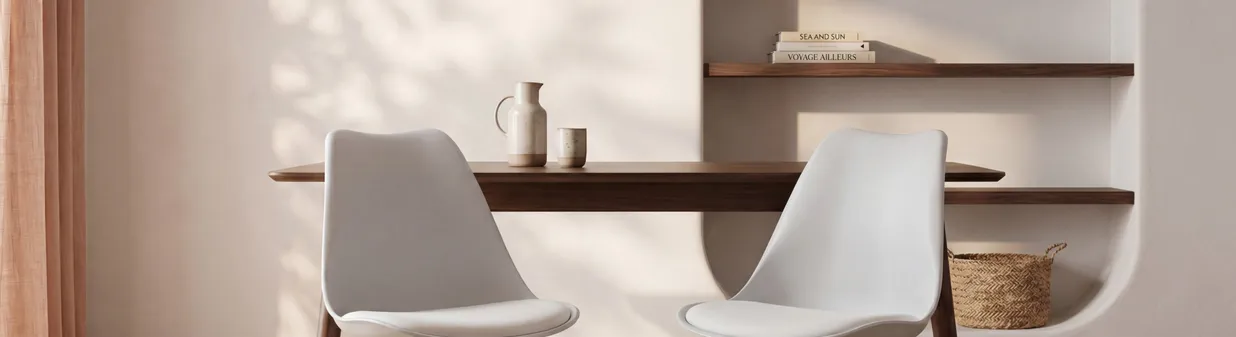
Top 10 iconic vintage chairs to know
The vintage chair has enjoyed real popularity for several years now. More than just a functional piece of furniture, it is a style icon, a piece steeped in history and a source of inspiration for decor lovers. Whether they date from the 50s, 60s or 70s, old chairs still make their mark on interiors today thanks to their timeless design and quality craftsmanship. Some have become true furniture legends, sought after by collectors and contemporary decor enthusiasts alike.
In this article, we explore ten cult models that have shaped design history and continue to win people over. Each piece is described in its historical context, its look and its materials, along with ways to bring it into a modern dining room, office or living room. Owning a beautiful vintage chair is not just about acquiring a period piece; it is also about giving it a place in today's interior, playing with contrasts, pairings and atmospheres.
The Eames DSW chair: the icon of the 50s
It is impossible to talk about vintage design chairs without mentioning the famous DSW created by Charles and Ray Eames in 1950. With its moulded plastic seat and splayed wooden legs joined by a metal frame, it symbolises a successful marriage of comfort, practicality and modernity. This light, versatile chair made its mark on design history through its accessibility and how innovative it was at the time.
Today, it remains a key piece in contemporary interiors. In a dining room, vintage dining chairs inspired by this model bring a lively, welcoming touch. Their simple yet elegant silhouette pairs just as well with a rustic solid wood table as with a modern glass one. The DSW is a cult vintage chair that suits every era, proof of its timeless appeal.
The Thonet No. 14 chair: the timeless classic
Created in the 19th century by Michael Thonet, the No. 14 chair, also known as the bistro chair, is one of the best-known beautiful old chairs in the world. Made from bentwood, it revolutionised furniture production techniques thanks to a steam-bending process that made it possible to create rounded, elegant and sturdy shapes.
This chair has furnished thousands of cafés and restaurants across Europe. It became the embodiment of the Parisian bistro style and is still prized today for its timeless charm. In a modern interior, the Thonet chair pairs well with boho or industrial decor. Its lightness and sturdiness make it a perfect option for a welcoming kitchen. Restored or left with its patina, it embodies the authenticity and charm of vintage.
Saarinen's Tulip chair: the futurism of the 60s
Designed by Eero Saarinen in the 60s, the Tulip armchair and its chair version are instantly recognisable thanks to their tulip-shaped central pedestal and rounded seat. At a time when design drew on organic and futuristic shapes, this vintage chair stood out as a new vision of modern aesthetics.
It is particularly suited to minimalist interiors. Set around a round table, the Tulip avoids the clutter of multiple legs and creates visual flow. It features in many contemporary interiors looking to recreate an elegant, airy atmosphere. Paired with a marble or white lacquered table, it gives a refined, futuristic feel while remaining very practical for everyday meals.
Breuer's Cesca chair: Bauhaus elegance
The Cesca, designed in 1928 by Marcel Breuer, is a chair that combines a tubular steel frame with a natural cane seat. It perfectly illustrates the spirit of the Bauhaus movement: combining function and aesthetics. Its clean silhouette and lack of back legs, replaced by a cantilevered frame, give it a unique look.
This vintage design chair is still highly sought after. In a dining room, it brings an inimitable retro-chic charm. Paired with a large light wood table, it creates a warm and elegant atmosphere. Its versatility also means it can find a place in a home office, bringing comfort and style.
The Panton chair: one-piece daring
Created by Verner Panton in the 1960s, this chair is a technical feat: moulded from a single piece of plastic, it has a sinuous, futuristic silhouette. Available in several bright colours, it has captured the collective imagination as a symbol of pop design.
It is a statement piece that does not go unnoticed. In a contemporary dining room, it adds a playful, artistic touch. For a more neutral interior, choosing white or black keeps its originality while maintaining a understated atmosphere. Many enthusiasts now use it as an occasional chair or as a centrepiece to liven up a set of vintage dining chairs, bringing contrast and personality to the decor.
The Wishbone chair: Scandinavian charm
The Wishbone Chair, designed by Hans J. Wegner in 1949, is the epitome of Scandinavian style. Its bentwood frame and woven cord seat combine craftsmanship and simplicity. This model is often cited as one of the most beautiful chairs in Danish design.
Today, the Wishbone remains a safe bet for lovers of Nordic decor. It feels right at home in a bright, uncluttered dining room. Paired with a large light oak table, it creates a warm, welcoming atmosphere. It perfectly illustrates the current trend for natural, sustainable materials.
The Louis Ghost chair: neo-baroque revisited
Created by Philippe Starck in the early 2000s, the Louis Ghost chair reinterprets the Louis XVI style in a contemporary material: transparent polycarbonate. Although relatively recent, it has already become an icon. Its look blends modernity and tradition, creating a striking contrast.
In a small space, this chair has the advantage of not weighing the room down visually thanks to its transparency. It works just as well with a contemporary dining table as with an antique wooden one, for a bold mix of styles. Today it is used both in homes and in chic public spaces such as hotels and design restaurants.
The Acapulco chair: the boho spirit
Inspired by 1950s Mexico, the Acapulco chair is made of a metal frame woven with colourful plastic cord. Designed for outdoor use, it has become a symbol of relaxed, boho furniture.
Placed in a living room, conservatory or on a terrace, it instantly brings a summery, welcoming atmosphere. In bright colours it livens up a space, while in black or white it becomes more elegant. This vintage chair is an original choice for anyone wanting to step off the beaten track, and it can complete a summer dining area to create a warm and inviting corner.
Mies van der Rohe's Cantilever chair: modernist rigour
The Cantilever chair is another piece born of the Bauhaus movement. Designed by Mies van der Rohe, it uses the cantilever principle, offering a suspended seat with no back legs. With its chrome steel frame and leather seat, it embodies modernist elegance.
It is a chair particularly well suited to an office or meeting room, but it can also fit into a dining room for a resolutely design-led look. Its slim, precise silhouette adds a touch of sophistication to any interior. More and more decorators pair it with more traditional vintage dining chairs to create a contrasting and refined ensemble.
The Windsor chair: rustic authenticity
Finally, the Windsor chair, which originated in England, is a great furniture classic. With its spindle back and solid wood seat, it exudes authenticity and conviviality. It has come through the centuries without losing its charm.
In a contemporary dining room, the Windsor chair can be used to play on the contrast between old and new. Set around a rectangular raw wood table, it evokes the family kitchens of yesteryear while remaining perfectly suited to today's interiors.
Why these chairs remain iconic
All these chairs, whether industrial, handcrafted or by great designers, share one thing in common: they transcend trends. A quality vintage chair is not just somewhere to sit; it becomes a centrepiece of the decor. Their value lies as much in their looks as in their ability to create a unique atmosphere in an interior.
Whether you choose an old chair with a time-worn patina, a beautiful designer chair or vintage dining chairs for everyday use, each one tells a story and reflects an era. Bringing them into your home means inviting the past into a conversation with the present and giving character to your living space.