Technical guide to choosing the right barbecue: gas, charcoal or electric
Cooking in the garden or on a terrace is the perfect opportunity to share a convivial moment with family or friends. However, deciding which barbecue to choose requires a factual analysis of the various appliances offered by manufacturers. Buying a barbecue is a commitment for several years and means considering your consumption habits and the space available, while comparing the three main energy sources. Solid fuel produces cooking through the direct action of the flame. Gas enables precise temperature control via tubular burners. Electricity offers a combustion-free solution suited to urban environments. Discover the features of each appliance to find the one that perfectly matches your expectations in terms of size, safety and performance.
Charcoal Cooking: Principles and Preparation
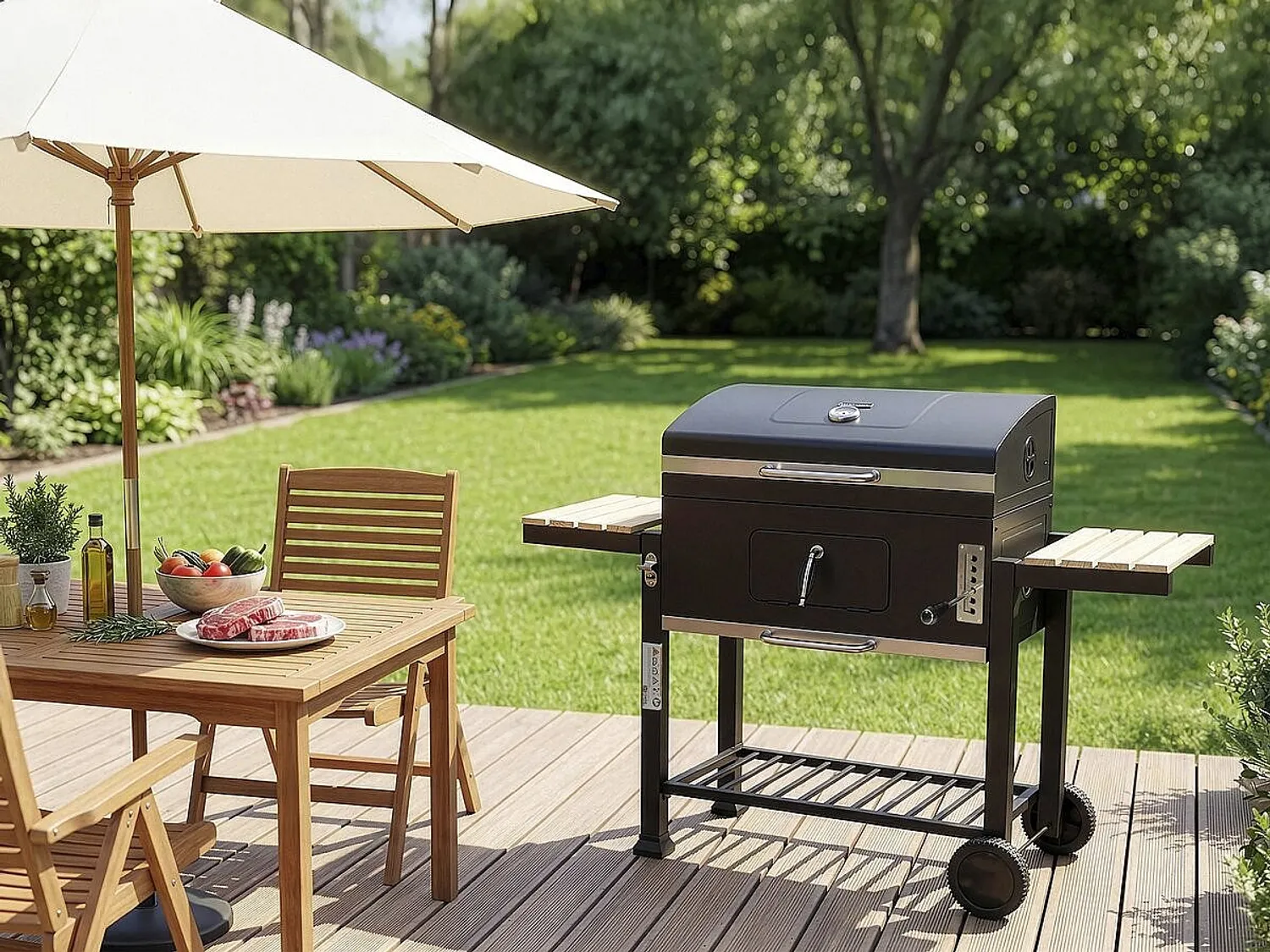
The charcoal barbecue remains the traditional choice for searing cuts of meat at high temperatures. This method gives food a smoky flavour, caused by the vaporisation of fats that come into contact with the embers.
Using this appliance requires a period of manual preparation. You need to light the fire, stabilise the heat and allow 30 to 45 minutes for it to heat up before placing the food on the grill. Using a galvanised steel tubular chimney starter makes this step easier. This metal cylinder concentrates the heat through the draught effect and enables you to obtain glowing briquettes without using flammable liquids.
The user can choose between traditional charcoal, which heats up quickly, and compressed charcoal briquettes, which ensure a slow burn over several hours for slow-cooking large cuts.
Materials, dimensions and tank equipment
The durability of these cookers depends on the alloys used during their assembly. A cast-iron bowl barbecue retains heat for a long time thanks to its high material density and withstands high temperatures without suffering structural deformation. If you opt for an enamelled steel structure, which is lighter to move on its wheels, check that the sheet metal is at least 1.5 millimetres thick to limit the risk of perforation caused by oxidation under the action of damp ashes.
The dimensions of the cooking area determine the appliance’s capacity:
- A diameter of 47 centimetres is sufficient to feed four to six people.
- A diameter of 57 centimetres allows you to prepare a meal for ten to twelve guests simultaneously.
Thermal settings and the structure of the gas barbecue
The gas barbecue is intended for users looking for immediate start-up and numbered heat control. This appliance starts via a mechanical or electronic piezo ignition system, creating a spark at the burners. The preheating time is under ten minutes to reach an internal temperature of 250 degrees Celsius. The rotary knobs, located on the front panel of the trolley, regulate the fuel flow. This design makes it possible to create different heat zones on the same surface. You can sear a rib of beef over high heat on the left-hand side, while cooking vegetables or fish over moderate heat on the right-hand side.
Analysing the specification sheets requires checking the rated power, expressed in kilowatts (kW). A value between 8 and 10 kW, distributed across three separate tubular burners, ensures even heating across a rectangular surface measuring 60 by 40 centimetres. The material of the burner rails affects the service life of the internal plumbing. Grade 304 stainless steel resists corrosion caused by overnight moisture and marinade salt. Several manufacturers incorporate inverted V-shaped metal protective bars above the burners. These components prevent grease drippings from clogging the openings and vaporise the juices to flavour the food.
Connecting the cylinder requires a regulator suited to the type of gas: 28 millibars for butane, which should be stored indoors, and 37 millibars for propane, which is frost-resistant outdoors. Cylinders are available in a 6-kilogram size to fit in the lower compartment, or a 13-kilogram size for extended autonomy. Additional equipment, such as a needle thermometer built into the lid or a 2.5 kW side burner dedicated to sauces, completes the installation.
Safety standards and the design of the electric barbecue
Leasehold regulations often prohibit the use of open-flame appliances on the balconies of apartment buildings for fire safety reasons. The electric barbecue complies with this legal restriction by eliminating carbon-based smoke emissions and the storage of pressurised containers. Connection requires a standard earthed socket supplying 220 volts, connected to a 30-milliamp residual-current circuit breaker on the main consumer unit. Using an extension lead requires a 3G1.5 mm² cable designed for outdoor use with an IP44 protection rating. This technology comes in various formats, from models mounted on tubular legs for narrow terraces to the compact tabletop barbecue. The latter format is placed in the centre of the dining furniture, allowing each guest to access the cooking area. The supplied power cable is often 1.5 metres long, requiring a power source in the immediate vicinity.
The effectiveness of these appliances depends on the power delivered by their immersion heating element. Models with a power rating below 2000 watts struggle to grill thick muscle tissue and are limited to slow cooking by boiling liquids. A heating element producing between 2200 and 2500 watts guarantees a rise in temperature capable of searing a distinct grid pattern onto food. The frame incorporates a lower aluminium or heat-resistant plastic drip tray, which must be filled with a little water before switching the appliance on. This liquid cools the melted fats as soon as they drip down, preventing them from burning onto the hot sides and stopping persistent odours from forming. Maintaining this equipment depends on its components being removable. Check that the heating element can be disconnected easily and that the searing plates fit in a standard dishwasher.
Grille materials and regular technical maintenance
Beyond the energy source, the material of the cooking grate influences the transfer of heat to the food. Raw cast iron offers high thermal inertia. It stores heat to caramelise cuts of meat on initial contact. This heavy material requires regular seasoning: applying a thin layer of heated vegetable oil creates a natural non-stick coating and prevents surface rust from forming. Stainless steel heats up more quickly, does not oxidise when exposed to water and requires less maintenance, but loses heat more quickly when a cold piece of meat is placed on it.
To maintain the appliance’s original performance, mechanical cleaning is required after each cooking session. Pyrolysis is the standard method for gas and solid-fuel models: close the lid and raise the temperature to its maximum level for fifteen minutes. Food residue will carbonise and can be removed by brushing with a brass-bristled brush. Emptying the grease collection tray once it has cooled prevents fires when it is next used. Before storing it for the winter, apply a degreasing product to the interior walls, rinse with clean water and dry the metal parts with a microfibre cloth to prevent corrosion beneath the protective cover.
Determine the best barbecue for your actual needs
Choosing your cooking equipment depends on finding the right fit for your living space and habits. The best barbecue is one that suits the size of your outdoor area and matches how often you use it without creating constraints. A bulky cooking station will remain unused if its size blocks the way. An undersized unit will turn preparing a meal for a group into a series of staggered cooking sessions. The floor space it occupies, fuel availability and winter storage requirements all influence the final decision. If your garden layout allows for it and the pursuit of smoky flavours takes priority over quick lighting, a charcoal barbecue will meet this culinary expectation with precision.
To invest in equipment suited to your hardware constraints, run through this checklist before approving your model:
- Check your residential development’s regulations or the local by-laws in force regarding permission for fires in residential areas or near vegetation.
- Estimate how often you will use it, distinguishing between a monthly session and regular use involving three lighting sessions per week in summer.
- Measure the covered storage space in your garage or shed to house the frame during the cold season, protected from frost.
- Assess the average number of people you host to size a grill surface capable of cooking all the portions in one go.
- Set aside a budget for purchasing safety and maintenance equipment, including a custom-made water-repellent cover and heat-resistant split-leather gloves.
The final choice of your equipment rests on a pragmatic analysis of your space, local regulations and culinary requirements. Whether you favour the thermal inertia of charcoal, the instant precision of gas or the safety of an electric model in an urban environment, the longevity of your investment will depend on the quality of the materials chosen. By combining a robust structure, such as cast iron or stainless steel, with regular maintenance, you ensure a durable appliance and perfectly controlled cooking throughout the seasons.