Successfully Designing Your Outdoor Kitchen: The Complete Guide
From the very first days of summer, the garden becomes a true additional living space. Making the most of long, mild evenings requires careful planning, particularly when it comes to preparing meals outdoors. An outdoor kitchen has now become an essential feature for lovers of good food and conviviality. This dedicated culinary area allows you to stay with your guests while avoiding endless trips back inside the house. Installing this setup beneath a pergola provides elegant shelter and ensures extended use, even when the breeze picks up or the sun becomes too intense. To turn this project into a lasting and attractive addition, a multitude of technical and decorative criteria must be taken into account, from the choice of materials to the ergonomics of the work areas.
Develop a functional and ergonomic outdoor kitchen plan
The success of your project depends on meticulous initial planning. Creating a detailed plan is the key step in ensuring a space that is both well-organised, practical and safe. Here are the essential rules to follow:
The organisation of space
- The work triangle: position the three strategic zones (storage, washing and cooking) close together to minimise unnecessary trips back and forth when preparing meals.
- Clearance: allow at least 90 centimetres of space in front of the appliances. This will enable two people to cook and pass each other without the slightest inconvenience.
Worktop dimensions
- Height: aim for between 85 and 92 centimetres, a comfortable standard suited to the build of most users.
- Depth: opt for 65 to 70 centimetres. This slight increase on the standard (60 cm) is very practical: it makes it easier to discreetly route plumbing and electrical cables behind the units.
- Preparation area: provide a clear space at least 80 centimetres wide. Ideally, position it between the sink and the hob so you can chop your vegetables and plate your dishes with ease.
The benefits of a covered outdoor summer kitchen
Exposing kitchen equipment to the elements requires planning for its protection. Opting for a covered outdoor summer kitchen is a wise investment to ensure the longevity of your installations. A sturdy roof protects your appliances from sudden showers, intense ultraviolet rays and falling plant debris. This covering radically transforms the user experience, allowing you to enjoy a meal even on a changeable day.
Several architectural solutions are available to shelter this area. The bioclimatic structure with adjustable aluminium louvres stands out for its ability to regulate temperature and ventilation naturally, efficiently dispersing cooking fumes.
A classic lean-to roof, covered with tiles identical to those on the main residence, ensures perfect integration into the landscape and architecture. If you prefer a more contemporary aesthetic, a flat roof structure covered with UV-treated polycarbonate panels will provide optimal light while blocking radiant heat. Whichever option you choose, allow for a roof overhang of at least 50 centimetres beyond the work surfaces to prevent driving rain from reaching your sensitive equipment.
The authenticity and charm of a wooden outdoor kitchen
The choice of materials defines the visual identity of your space. Incorporating a wooden outdoor kitchen brings immediate warmth and blends naturally with your garden. However, this living material requires careful selection to withstand moisture and insects.
Choice of wood species
- Exotic woods (Teak, Ipe): renowned for their exceptional density and natural resistance to rot, they are premium choices, perfect for façades and worktops.
- Local alternatives (Scots Pine, Ash): these species require treatment (pressure treatment or thermal modification). These eco-friendly processes alter the structure of the wood, making it completely impervious to moisture.
Maintenance: the secret to longevity
- Prevent greying: under the effect of UV rays and oxidation, wood tends to turn grey. To preserve its original lustre, annual application of a wood saturator or protective oil is essential.
- Nourish the material: this regular routine deeply nourishes the fibres while allowing the wood to breathe.
Select each outdoor kitchen unit with care
Furniture intended for outdoor use differs fundamentally from indoor fittings. Purchasing a kitchen cupboard requires a meticulous inspection of the finishes and joints. The carcasses must incorporate water-repellent materials as a matter of course, otherwise the structures may swell and warp during the first wet season. Galvanised steel, powder-coated aluminium or compact laminate panels (HPL) offer outstanding mechanical and weather resistance.
The hardware plays a crucial role in the durability of your installation. Hinges, drawer runners and handles require 304-grade stainless steel, or even 316, often referred to as marine-grade stainless steel. This alloy, enriched with molybdenum, offers excellent corrosion resistance, even in salt- or chlorine-rich environments, if your space is located near a swimming pool. The ergonomics of these storage units also deserve consideration. Opt for full-extension drawers to access your bulky utensils easily.
Fit doors with ventilation grilles or louvres to ensure continuous air circulation inside the cabinets, thereby reducing the risk of condensation or mould growth. Installing the units on height-adjustable feet isolates them from the damp ground while also compensating for any unevenness in the terrace.
Cooking equipment: mastering the art of outdoor dining
The essence of your outdoor kitchen lies in the cooking equipment you select. While the traditional charcoal barbecue retains its devotees thanks to its unmistakable smoky flavour, other more versatile appliances are now becoming increasingly popular. Integrating a plancha radically transforms the way food is prepared. This appliance of Iberian origin allows delicate foods to be seared, from crisp vegetables to fragile fish fillets, without direct contact with the flames, ensuring healthy cooking and optimal preservation of flavour.
To choose a model perfectly suited to your demanding requirements, several technical features deserve careful consideration:
- Thick enamelled cast-iron or solid stainless-steel cooking plate for excellent heat retention.
- Powerful dual- or triple-ring burners with even heat distribution across the entire surface.
- Large, removable grease collection tray for effortless daily cleaning.
- Sturdy, weather-resistant stainless-steel chassis with integrated splash protection.
- Fold-down protective lid with a keep-warm function for food that has already been seared.
Adding a generous-sized inset sink, measuring at least 50 by 40 centimetres, completes this functional space. A deep bowl makes it possible to rinse large cooking grates and serving dishes without flooding the worktop. Fit this sink with a pull-out spray mixer tap, which is particularly practical for cleaning bulky accessories.
Secure technical connections and optimise lighting
The technical foundations ensure that your installation operates properly. Planning the water and electricity networks from the outset of the project avoids complex masonry work later on. The electrical circuit requires rigorous compliance with the standards in force for outdoor environments (NF C 15-100 standard in France). Plan for a dedicated line protected by a 30 mA residual-current circuit breaker, connected to power sockets with an IP65 protection rating, ensuring complete watertightness against water jets and dust.
The drinking water supply requires cross-linked polyethylene (PEX) or copper piping, fitted with a shut-off valve and a drain tap located in a frost-free area inside the property. This precaution prevents the pipes from bursting when temperatures drop in winter. Wastewater is discharged through a PVC pipe with a minimum diameter of 40 millimetres, laid with a consistent gradient of 1 to 2% to prevent any stagnation.
The lighting design extends the use of this space well beyond sunset. Functional, targeted and powerful lighting (around 4000 Kelvin) should illuminate the worktop and cooking area to ensure safe handling of knives and precise monitoring of cooking. Complement this technical system with decorative perimeter lighting. Installing wall lights or festoon lights with a warm glow (around 2700 Kelvin) creates a subdued, intimate atmosphere, inviting relaxation.
Complete the layout with a welcoming tasting area
The visual continuity between the preparation area and the reception space encourages interaction with your guests. Extending the worktop into a spacious breakfast bar creates a natural gathering point. For optimum comfort, adjust the seat height to that of the table. A standing-height table measuring 110 centimetres from the floor requires high stools with a seat height of 75 centimetres, while a standard 90-centimetre island pairs with bar chairs measuring 65 centimetres high.
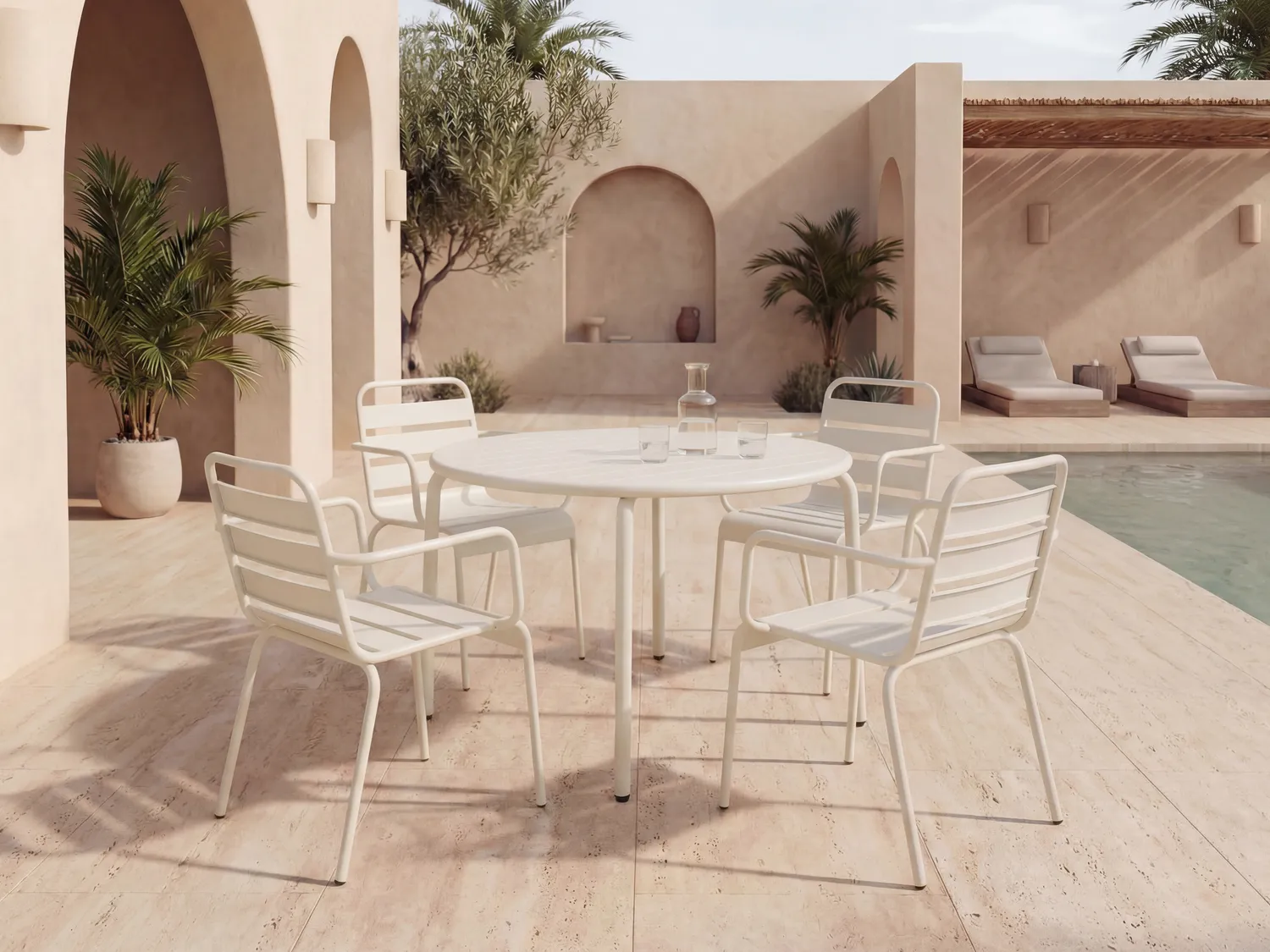
Harmonising the materials of the reception furniture with those of the cooking area enhances the elegance of the whole. Armchairs combining powder-coated aluminium with marine-grade braided rope or water-repellent fabric offer exceptional resistance to the whims of the weather while providing comfort worthy of an indoor lounge. Add a few potted aromatic herbs around the area, such as rosemary, thyme or basil, which will diffuse their Mediterranean fragrances while remaining within easy reach for seasoning your last-minute grilled dishes. This attention to decorative details transforms a simple functional area into a true summer paradise, perfect for celebrations and memorable meals.