Soundproofing in a flat: practical solutions without major building work
Living in an urban environment often means being exposed to persistent noise pollution: street and traffic noise, conversations in the street and various neighbourhood noises. Without undertaking major works, it is still possible to significantly improve acoustic comfort with accessible, well-targeted solutions. The aim is to limit the spread of sound by working on the absorption, insulation and airtightness of surfaces. As soon as the first nuisances appear, openings should be treated as a priority. A poorly insulated window can easily let outside noise through, particularly when the glazing or seals are inadequate.
Understanding the Sources of Noise in a Flat
Before implementing a noise-reduction solution in a flat, it is essential to identify the source of the disturbance. Sounds do not all travel in the same way, and how they are treated depends directly on their nature.
Airborne noise, such as voices or music, travels through the air and passes through walls. A normal conversation reaches around 60 dB, while road traffic can exceed 80 dB. Impact noise, on the other hand, comes from direct knocks to the building’s structure, such as footsteps or objects falling. Finally, equipment noise is linked to technical installations, such as plumbing or ventilation systems. In an older building, these three types of nuisance often combine, explaining the feeling of constant noise.
Understanding these distinctions makes it possible to tailor solutions and avoid ineffective adjustments. A quick analysis of the sound environment at different times of day helps to identify priorities.
Optimise openings to reduce disturbances
Openings are often the weak point in acoustic insulation. A targeted intervention in this area can significantly transform the sound environment of a home.
Improve window insulation
Glazing plays a central role in reducing noise. Standard double glazing can already reduce noise by around 30 dB, while a reinforced model, with asymmetric thicknesses such as 10/14/4 mm, can achieve up to 40 dB of acoustic attenuation.
Without completely replacing the joinery, several simple adjustments can deliver tangible results. Adding foam or silicone weatherstripping, with a thickness of between 3 and 6 mm, effectively fills gaps. Thick thermal curtains, with a density of over 300 g/m², also help absorb some of the sound waves. Finally, removable secondary glazing is an interesting intermediate solution, adding an extra barrier against noise. On a busy road, this combination can noticeably reduce disturbances from the very first installations.
Treat doors and air vents
Doors, particularly hollow ones, allow noise pollution to pass through easily. Improving their sound insulation involves simple but effective measures, such as adding an insulating draught excluder or a thick acoustic curtain. These solutions limit noise infiltration, particularly from communal areas. Paying particular attention to air vents, which are often overlooked, can also reduce incoming noise without compromising ventilation in the home.
Use textiles to absorb sound
Textile materials play a fundamental role in sound absorption. Unlike hard surfaces, they absorb sound waves and reduce reverberation, immediately improving the sense of comfort.
Install thick carpets
A dense rug is an effective solution for reducing impact noise. A model at least 10 mm thick, combined with an insulating underlay of around 5 mm, limits the transmission of vibrations. Natural fibres such as wool are particularly effective, as they absorb sound better than synthetic materials. In flats with old wooden floors, this solution considerably reduces squeaks and resonance.
Increase textile surfaces
Curtains, cushions and wall hangings also contribute to improving acoustics. Thick curtains covering the full height of the walls effectively reduce outside noise. Cushions made from dense materials and wall tapestries help break up echoes and create a more muted atmosphere. Combining these elements, without overcrowding the space, makes it possible to achieve a pleasant and lasting acoustic balance.
Install decorative acoustic panels
The acoustic panel is both an effective and aesthetically pleasing solution for treating walls without carrying out major building work.
Made from polyurethane foam or compressed fibres, these panels are generally between 30 and 60 mm thick. Their sound absorption coefficient can reach 0.9, meaning that they absorb a large proportion of sounds. They are particularly effective against airborne noise, such as conversations or television noise coming from a neighbouring home.
For optimum effectiveness, their positioning must be carefully considered. Party walls shared with neighbours are the priority areas, as are surfaces at ear level. Covering around 20 to 30% of the wall surface produces a noticeable result without visually overwhelming the space.
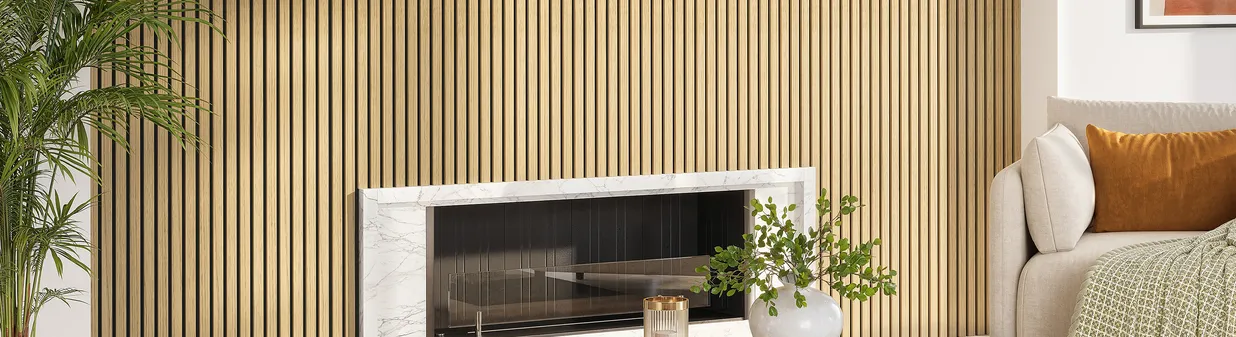
Some models fit perfectly into an interior design project, thanks to wood or fabric finishes that combine acoustic comfort with aesthetics. This type of solution therefore meets a dual requirement: technical performance and decorative coherence.
Reorganise the space to limit sound transmission
The arrangement of furniture directly influences the way sound travels through a flat. A strategic layout can reduce noise without modifying the structure of the property.
Large pieces of furniture, such as bookcases or wardrobes, can act as natural acoustic barriers when placed against shared walls. A bookcase filled with books, with a depth of around 30 cm, effectively absorbs sound thanks to the density of the materials.
Furthermore, limiting reflective surfaces significantly improves acoustic comfort. Materials such as glass or tiles reflect sound waves, unlike wood, cork or textiles, which absorb them. Introducing these materials into the décor helps balance the room’s acoustics. A room that is too minimalist, with few elements, often amplifies noise rather than attenuating it.
Simple solutions for walls and ceilings
Even without structural work, it is possible to improve the sound insulation of walls and ceilings with lightweight, affordable solutions.
Suspended panels, installed a few centimetres below the ceiling, help absorb some of the sound, particularly in rooms with high ceilings. A distance of 5 to 10 cm between the support and the ceiling improves their effectiveness, especially for low frequencies, which are often difficult to attenuate.
For walls, natural cork coverings, with a thickness of between 4 and 10 mm, offer a discreet and effective solution. Acoustic wallpaper or decorative panels made from compressed fibres are also interesting alternatives, combining insulation with aesthetics. These solutions adapt easily to the constraints of flats, without requiring structural modifications.
Improve the property's overall airtightness
Good sound insulation relies on continuous surfaces. The slightest gap can let noise through and reduce the effectiveness of the improvements.
Cracks, electrical sockets or cable openings must be carefully sealed using suitable sealants. Likewise, the junctions between walls, floors and ceilings deserve particular attention. Adding seals or insulating skirting boards helps to reinforce the whole structure and prevent sound infiltration. This precise work, often underestimated, nevertheless significantly improves the final result.
Combine the solutions for an optimal result
The effectiveness of a noise reduction solution in a flat relies on combining several techniques. Combining an acoustic panel, a thick rug, sound-absorbing textiles and good sealing can significantly reduce noise nuisance, sometimes by as much as 10 to 20 dB, which corresponds to halving the perceived sound level.
Each home has its own specific constraints, whether relating to the layout of the rooms or the nature of neighbour noise in a flat. Adapting solutions to these particularities ensures lasting, noticeable acoustic comfort in everyday life, without resorting to extensive or costly work.
Improving the acoustic comfort of a flat is above all based on a comprehensive and strategic approach, without requiring significant structural investment. By precisely identifying the nature of the disturbances, it becomes easy to combine the treatment of openings, the integration of sound-absorbing textiles and the careful sealing of walls. Combining these various lightweight solutions helps to reduce the overall perception of sound within the home. This pragmatic method therefore ensures a permanently peaceful living environment, isolated from urban and neighbourhood noise, while preserving the decorative coherence of your interior spaces.