
How to Choose the Right Rug Size Without Disrupting Your Room?
A well-sized rug instantly transforms a room. It structures the space, highlights the furniture, and enhances visual harmony. Conversely, a poorly chosen rug size can break proportions, create a sense of tightness, or disorganise the overall look. To avoid these mistakes, it is essential to understand the rules governing rug dimensions for each room. You can already explore a wide selection of rugs to see the most suitable formats for your interior.
Why Is the Size of the Mat Crucial?
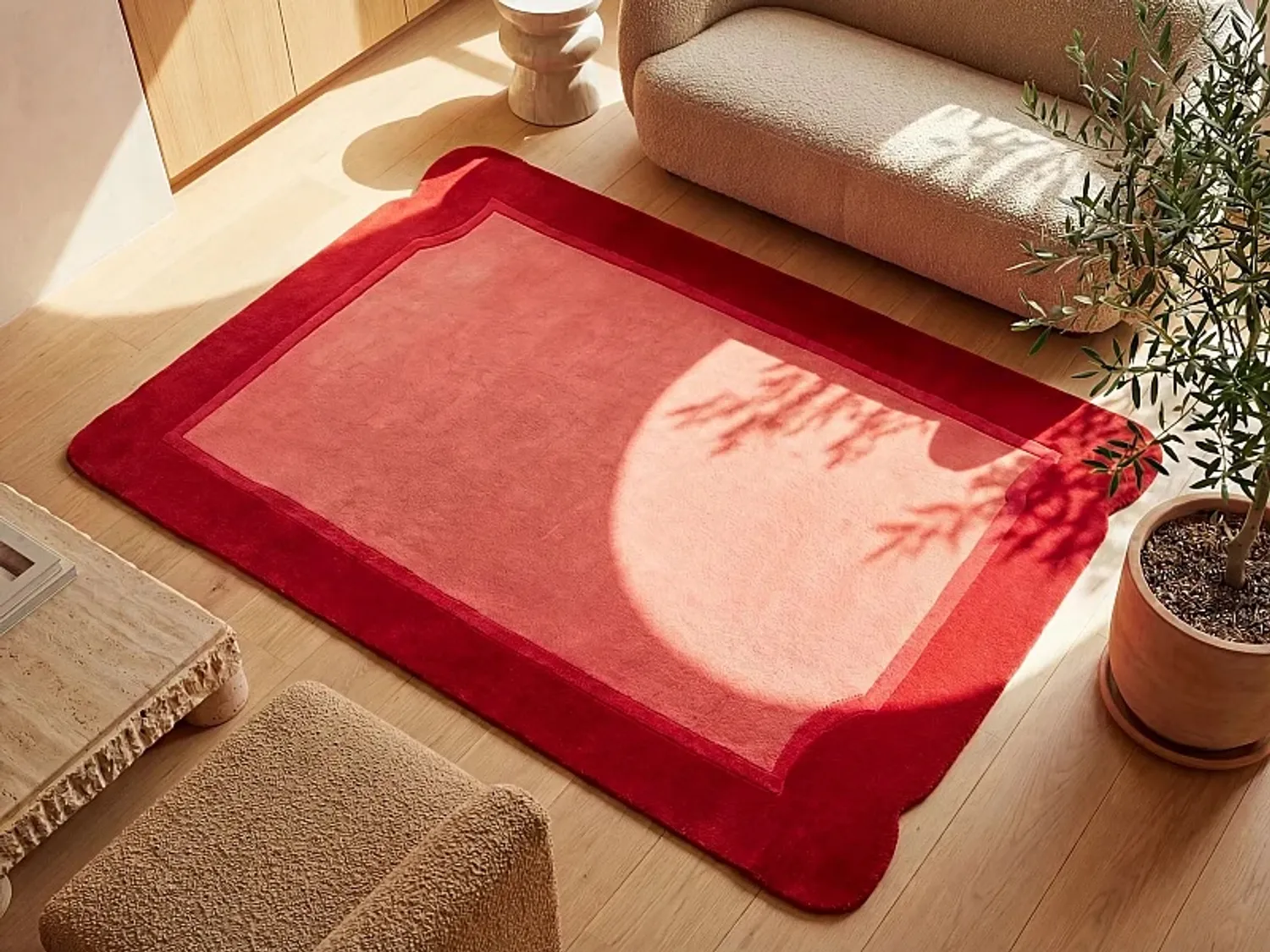
The rug is not just a simple decorative accessory. It plays a structuring role in your interior design. Its size directly influences the perception of volume, circulation, and the overall balance of the room. A rug that is too small gives the impression that the furniture is floating in the room. Conversely, a rug that is too large can overwhelm the space and hide architectural lines. The goal is to find a happy medium that creates a coherent zone, without visual overload or emptiness. In a living room, for example, a rug should generally connect the main elements such as the sofa, coffee table, and armchairs. In a bedroom, it should accompany the bed while leaving a comfortable surface around it.
What size of rug according to the furniture arrangement?
Beyond standard dimensions, the size of the rug must always be considered based on the actual layout of the furniture. Each configuration requires its own adjustments to ensure a harmonious and functional appearance.
- In a lounge with a corner sofa, the rug should ideally follow the shape of the furniture. A model that is too small placed only in front of the chaise longue breaks the visual balance. Conversely, a sufficiently wide rug, extending 20 to 30 cm on each side, helps unify the overall look and enhances the feeling of comfort. This logic also applies to open-plan sitting areas where the rug serves to delineate a specific zone without partitioning the space.
- For a room equipped with several independent armchairs, the rug must create a link between each element. It is recommended to opt for rug dimensions that encompass at least the front feet of each seat. This prevents a scattered effect and provides a clear structure to the layout.
- In a dining room, the focus is mainly on the table and chairs. The rug should extend at least 60 cm beyond the table on all sides to allow the chairs to remain on the rug even when pulled out. For example, for a table measuring 180 x 90 cm, a rug of 240 x 330 cm is particularly suitable. This proportion guarantees both ease of use and visual balance.
The essential rules for choosing the right rug size
Certain simple rules help to avoid the most common mistakes. They are based on visual proportions rather than strict standards :
- Maintain a peripheral margin of 20 to 40 cm between the rug and the walls to avoid a confining effect.
- Size the rug to match the main furniture, not just the room.
- Opt for a sufficiently large rug to accommodate at least the front feet of the furniture.
- Avoid too-small rugs that fragment the space rather than structuring it.
- Consider circulation areas to prevent obstructing movement.
These principles enable a balanced finish, whatever the chosen decor style.
What Size Rug For A Harmonious Lounge?
The living room rug is often the focal point of the decor. Its size must be carefully chosen to create visual harmony. Three main configurations exist.
The rug under all the furniture
In this configuration, the rug covers the sofa, the armchairs, and the coffee table, making it the most structural option for the living room. The recommended dimensions are 200 x 300 cm for a standard lounge and 250 x 350 cm for a larger space. This solution provides a sense of comfort and coherence to the whole.
The rug partly under the furniture
Only the front legs of the sofa and armchairs rest on the rug. This helps to define the area without visually weighing down the room. A very common size is the rug 160x230 cm.
The independent rug under the coffee table
In this configuration, the rug is placed only under the coffee table, without touching the other furniture. The ideal dimensions are around 120 x 170 cm or 140 x 200 cm, which helps maintain a balanced appearance without overcrowding the space. This choice remains aesthetic, but it offers a less defined structure to the living room than the more encompassing configurations.
How to choose a carpet for a bedroom?
The bedroom rug should provide warmth and comfort while respecting the room's balance. Three main options stand out.
The large rug under the bed
The rug extends well beyond the bed to provide a comfortable surface upon waking. For a 140 cm bed, a rug of approximately 200 x 300 cm is generally recommended, while a 160 cm bed is better showcased with a rug around 240 x 340 cm. This choice creates an enveloping and harmonious atmosphere in the room, while visually structuring the space around the bed.
The two side mats
Two identical rugs are placed on each side of the bed, to provide a soft area underfoot when getting up or going to bed. Typical dimensions are around 60 x 120 cm or 70 x 140 cm, which help maintain balanced proportions without hindering circulation. This solution is ideal for narrow bedrooms or when you want to visually lighten the space while keeping a warm effect.
The end-of-bed rug
A rug is placed at the foot of the bed to add a decorative touch. The recommended sizes are generally around 120 x 170 cm or 140 x 200 cm, which helps to highlight the presence of the bed without encroaching on the circulation. This layout slightly structures the space without cluttering it, while bringing a cosy note to the bedroom.
What size rug for a hallway?
The corridor rug must accompany the flow of traffic without obstructing passage; proportion is essential here. Ideally, leave around 10 to 15 cm on each side between the rug and the walls, and the length should cover approximately 70 to 80% of the corridor, to avoid the “lost rug” effect or, conversely, something too overwhelming. Common sizes include, for example, 60 x 200 cm, 80 x 250 cm, or 80 x 300 cm, which structure the corridor without blocking the passage. A rug that is too wide cuts off circulation, while a too narrow model seems lost.
Adjust the size of the mat to fit the shape of the room.
The shape of the rug also influences the perception of space. A rectangular rug visually elongates a room, while a square rug enhances the feeling of stability. A round rug, on the other hand, softens the angles and adds fluidity to the overall space. In a rectangular living room, a rectangular rug placed lengthwise accentuates the depth of the room. In a square room, a square or round rug helps to balance the proportions.
What are the mistakes to avoid?
Certain common mistakes frequently occur and harm the overall harmony of the layout:
- Choosing a rug that is too small for fear of cluttering the space.
- Bonding the rug to the walls without leaving any visual margin.
- Ignoring the proportions of the furniture.
- Multiplying small rugs without coherence between them.
- Neglecting the thickness of the rug in the passage areas.
These errors create an impression of disorder or imbalance in the room.
The impact of dimensions on the decorative style
The size of the rug also influences the overall style of the room. A large rug enhances a contemporary and sleek atmosphere, while several smaller rugs can create a bohemian or eclectic vibe. In a minimalist interior, it is better to opt for a wide and discreet rug. In a bolder decor, you can experiment with different sizes and layering to energise the space.
How to properly measure your space?
Before choosing a carpet, it is essential to measure the affected area accurately.
- Measure the length and width of the room.
- Identify the placement of the furniture.
- Visually mark out the rug area with adhesive tape.
- Check the margins around the rug.
This simple method helps avoid unpleasant surprises and ensures an appropriate choice.
Choosing the right rug dimensions is about finding a balance between aesthetics and functionality. Each room imposes its own constraints, but the principles remain universal: respect proportions, structure the space, and ensure smooth circulation. A well-chosen rug becomes a true element of interior architecture. It connects the volumes, enhances the furniture, and subtly transforms the atmosphere of a room.