

Create an environment conducive to your baby’s sleep
The first nights with a baby are often punctuated by waking, crying and endless questions about how to help your baby sleep through the night. Creating an environment conducive to sleep is not just about installing a few pieces of furniture. It means orchestrating the space, sensations and routines so that the baby associates their bedroom with a place of relaxation, security and recuperation.
Adapt the environment to the newborn’s rhythm
In the first few weeks, a newborn sleeps in short stretches, interrupted by feeds and care. At this stage, the main aim is to maintain a stable environment, even if nights remain very fragmented. Consistency in the room, routines and timings creates a reassuring foundation for these many micro-cycles of sleep.
As the months go by, the routine changes and periods of rest become longer. As the months go by, the routine changes and periods of sleep become longer. Adapting the layout is essential to ensure that the bedroom remains in step with your child’s changing needs. For example, a space that is too stimulating or poorly organised can hinder your baby’s progress towards longer nights.
By observing how your child falls asleep, wakes up or reacts to light and noise, it is possible to gradually fine-tune their environment so that it genuinely supports their development.
Set up a baby cot designed for sleep
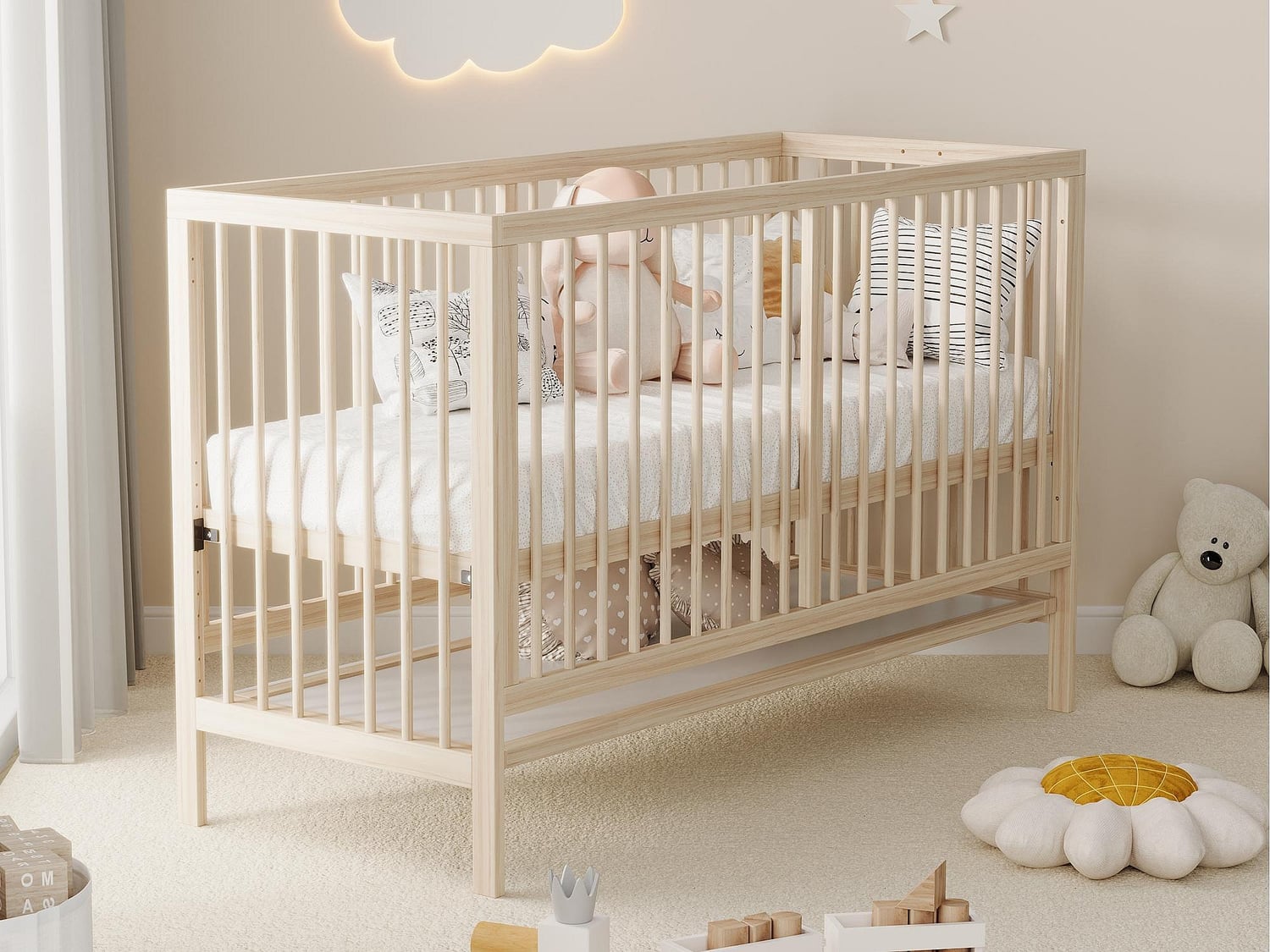
The baby cot is the infant’s main point of reference. A well-chosen model that complies with NF EN 716 standards promotes more peaceful rest and reduces wake-ups caused by discomfort or feelings of insecurity. Choosing a model with bars and an adjustable base makes it possible to keep up with the child’s growth while maintaining a stable and reassuring structure.
Beyond choosing the model, the sleeping area should provide enough space for the baby to move around slightly without being lost in a disproportionate amount of room. Rails with suitable spacing make sleep safer while allowing light and air to circulate, contributing to an atmosphere that is both protective and open.
The arrangement of the newborn’s bed in the room also plays a key role in the quality of their rest. By placing the bed against a solid wall, away from windows and sources of noise, light and sound fluctuations likely to interrupt sleep are minimised. This consistent positioning, maintained night after night, creates a reassuring visual and spatial routine for the baby.
Choose a baby mattress that supports peaceful sleep
A suitable baby mattress supports an infant’s body and helps them find a stable position quickly. A baby mattress that is firm and fits the cot frame properly prevents sagging areas and limits micro-awakenings caused by uncomfortable changes in position.
Breathable materials contribute directly to sleep quality. A structure that allows air to circulate reduces the feeling of excessive heat and limits night-time sweating. By keeping the surface dry and at a moderate temperature, the baby mattress helps create a stable resting environment, conducive to longer periods of sleep.
For this balance to be complete, the bedding elements must extend these benefits. A well-fitted, crease-free fitted sheet and a silent mattress protector prevent rustling that wakes the infant at the slightest movement. Together, they create a consistent sleeping base, centred on stability and comfort.
Regulate the baby’s room temperature
The baby’s room temperature affects the infant’s ability to fall asleep. A room that is too warm causes restlessness and frequent waking, while an environment that is too cool can lead to discomfort and unease. Maintaining a moderate, consistent temperature helps create a reassuring atmosphere.
A wall-mounted thermometer or one placed on a chest of drawers makes it easy to quickly check the baby’s room temperature before bedtime. During the day, brief but regular ventilation refreshes the air and removes humidity without excessively cooling the room when the infant is in it.
Baby’s clothing helps to regulate temperature. A sleeping bag suited to the season, paired with comfortable pyjamas, reduces the risk of overheating or becoming too cold. By adjusting clothing rather than the heating, parents can fine-tune the environment without creating multiple fluctuations in temperature during the night.
Adjusting the lighting to support your baby’s bedtime
Light directly influences an infant’s sleep–wake cycles. Lighting that is too bright keeps them awake for longer, whereas gradually dimming the light gently prepares baby for bedtime.
In the evening, a lamp emitting a warm, gentle light helps create a soothing atmosphere. Indirect lighting, directed towards a wall or the ceiling, reduces contrasts and limits visual stimulation. When it is time for putting baby to bed, gradually dimming this light clearly signals to the infant that night-time is beginning.
At night, a subtle night light may be enough to reassure the child while maintaining darkness conducive to deep sleep. It makes it easier for parents to move around during night-time care without recreating a full daylight atmosphere.
By avoiding harsh light sources, the risk of prolonged waking and confusion between day and night is reduced.
Manage sounds and noise to ensure safe sleep
The soundscape in the room has a strong influence on the quality of rest. Some babies wake up at the slightest sudden noise, while others, on the contrary, settle more easily in a gently active environment. Observing the baby’s reaction makes it possible to fine-tune the soundscape around baby’s bedtime.
Sudden noises can be softened with a few simple adjustments. Thick curtains or suitable blinds reduce reverberation, while rugs lessen the sound of footsteps. If the baby seems to settle with a constant background sound, a device playing gentle white noise or very soft music may help mask unpredictable sounds. The important thing is to create a consistent and stable sound environment.
Establish a reassuring bedtime routine
A well-established routine provides a valuable point of reference for a newborn. This ritual, repeated every evening, helps the baby anticipate bedtime and feel safe. It is not limited to a single action, but consists of a series of consistent steps. For example, you could establish a simple routine comprising some quiet play, a nappy change, a cuddle, and then settling the baby in their cot. By keeping the same order, parents give their baby a stable structure. This reassuring environment prepares the mind and body for sleep, even before the baby is placed in their baby cot.
One of the key aspects of this routine is putting the child to bed while they are still awake but already calm. This practice helps them associate falling asleep with their own bed, rather than solely with their parent’s arms. Gradually, the baby develops the ability to soothe themselves in their own space, reducing their reliance on intervention during the night.
Simplify and calm the bedroom to support rest
A visually cluttered environment can interfere with an infant’s rest. An accumulation of bright colours, patterns and toys visible from the cot keeps their attention alert. A sleep-friendly room, on the other hand, focuses on simplicity.
Softly coloured walls, a few carefully chosen decorative elements and closed storage help to limit visual clutter. The most stimulating soft toys and toys belong in another area of the bedroom or in a separate play space.
Observe your baby to adjust the environment
Every baby has their own cues and preferences. Some react strongly to light, while others are sensitive to noise or temperature. Observing signs of tiredness and reactions to different adjustments helps fine-tune the sleep environment to suit their needs as closely as possible.
Signs such as yawning, rubbing their eyes or growing restlessness indicate that it is time to start the baby’s bedtime routine. By responding to these signals rather than ignoring them, parents can prevent overtiredness, which often makes it harder to fall asleep and leads to frequent waking.
Adjusting the environment may mean slightly modifying the lighting, changing the sleeping bag, repositioning the bed or adapting the level of background noise. By proceeding in small steps, it becomes possible to identify what best supports the child’s rest. This personalised approach transforms the bedroom into a true ally for lasting, restorative sleep.
