
Art Deco bed: how to style it in a modern or classic bedroom
In the world of interior design, some pieces of furniture span the decades without losing their appeal. The Art Deco style bed is one of them. Heir to an artistic movement born in the 1920s, it embodies understated luxury, geometric elegance and sophisticated materials.
Whether you want to create an Art Deco bedroom true to the spirit of the era or simply add a retro-chic touch to contemporary decor, such a bed is a natural centrepiece. So how do you recognise one and, above all, how do you style it harmoniously in a modern or classic space?
Understanding the essence of the Art Deco movement
Before looking at furniture, it is worth grasping the spirit of the Art Deco movement. Born in the 1910s but popularised from the 1925 International Exhibition of Modern Decorative and Industrial Arts in Paris, this style was a response to Art Nouveau. Where Art Nouveau favoured organic curves and exuberance, Art Deco opts for structured shapes, bold lines and a more pared-back look.
This movement draws on varied influences: ancient Egypt, Aztec patterns, aviation and modern architecture. The materials used reflect a desire to combine modernity and refinement.
Recognising an Art Deco style bed
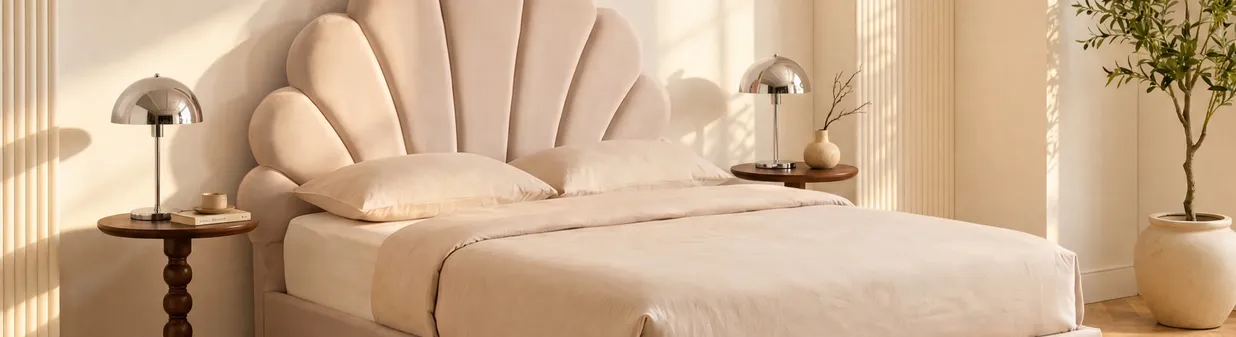
A true Art Deco bed stands out at first glance for its graphic lines and balanced proportions. An Art Deco headboard is often imposing, decorated with rectangular shapes, chevrons or fan motifs, an essential emblem of this 1930s movement. These bold lines reflect a search for order and symmetry, two fundamental values of the period.
The materials used also reflect the noble character of the style. You will often find lacquered wood, walnut or mahogany, combined with coverings such as pinwale velvet or buttoned leather. Metal details play a key role: brass inlays, chrome finishes or bronze elements highlight the outlines while enhancing the sophistication of the piece.
In terms of dimensions, Art Deco beds generally follow French standards: 140 x 190/200 cm for a double bed, 160 x 200 cm for a queen size or 180 x 200 cm for a king size. The height of the headboard varies between 80 and 130 cm depending on the width of the bed, ensuring a strong visual presence without upsetting the proportions of the bedroom.
The advantages of an Art Deco bed in a bedroom
Beyond its unique look, the Art Deco bed appeals through the many advantages it brings to daily life.
First, it has strong visual impact: its imposing headboard instantly catches the eye and naturally becomes the centre of the decor. It also offers a timeless dimension. Unlike some trends that quickly go out of fashion, Art Deco spans the eras without losing its charm, making it a lasting choice in terms of both style and quality.
Its decorative versatility is another strength: this type of bed fits into a modern bedroom as well as a more classic setting. Thanks to its structured shapes and fine materials, it creates visual harmony with different decor styles.
Finally, this furniture combines comfort and distinction. Materials such as leather, velvet or solid wood are not just about looks: you are choosing a piece that combines style, comfort and durability while expressing a clear taste for refinement.
Styling it in a modern bedroom
Contrary to popular belief, Art Deco, which dates from the early 20th century, goes perfectly with contemporary decor, provided you follow a few rules of harmony. In a modern bedroom, the bed becomes a visual anchor. Picture a midnight blue velvet model with gilded wall lights and a graphic rug: the atmosphere turns into a refined cocoon.
The trick is to keep the surrounding elements understated. A bed with a dark wood frame and metal inlays goes very well with a light floor and discreet lighting. A few gold touches, such as a bedside lamp or a frame, are enough to create a harmonious echo.
In short, bringing an Art Deco bed into a modern bedroom means creating a dialogue between past and present, where the strength of retro design enhances contemporary purity.
Styling it in a classic bedroom
Conversely, in a classic-style bedroom, an Art Deco bed feels right at home. Its structured shapes and fine materials work easily with wall mouldings, heavy curtains and traditional furniture.
A carved wood or buttoned velvet headboard fits perfectly into this type of atmosphere. You can pair it with a crystal chandelier, oriental rugs or solid wood chests of drawers to create a coherent bedroom. The important thing is not to overdo it!
Colours also play a crucial role: pairing an Art Deco bed in deep tones (burgundy, emerald green) with light walls (cream, beige) avoids an overly heavy atmosphere. Gold or brass finishes recall classic codes while reinforcing the identity of this artistic movement.
Enhancing an Art Deco bed with lighting and matching furniture
An Art Deco bed only reveals its full beauty when it is well staged in the bedroom. Lighting plays a key role here: it is not just about lighting the room, but about creating a refined atmosphere that shows off the graphic lines and fine materials of the style. Brass wall lights on either side of the headboard create practical symmetry, while a geometric ceiling light or stylised pendant recalls the iconic shapes of the 1930s. For a softer mood, bedside lamps with frosted glass shades give off an enveloping light, ideal for a restful atmosphere while highlighting the decorative character of the furniture.
But however majestic, a bed does not exist in isolation. It needs to work with the other furniture to create a harmonious bedroom. Bedside tables can echo the codes of the bed, with chevron fronts, brass feet or dark lacquered finishes. An Art Deco chest of drawers or dressing table will provide stylistic continuity and strengthen the coherence of the whole.
You can also play with contrasts: in a more contemporary bedroom, pairing an Art Deco bed with a minimalist wardrobe or modern walk-in closet creates a subtle mix of styles. This type of arrangement avoids a static look and brings energy to the space.
Colours and materials to choose
Art Deco style is built on a palette of deep colours that can turn a bedroom into a true refined haven. Rich tones such as navy blue, emerald green, burgundy and deep black create an enveloping atmosphere. To stop the room looking too dark, they are paired with bright touches of gold, copper or brass, which add sparkle and sophistication.
Materials are just as essential in this style. Velvet, inseparable from Art Deco, is a must on a headboard or cushions for a sumptuous look. Leather adds a more masculine dimension, ideal for balancing decor that is too soft. Finally, dark wood such as walnut or ebony embodies authenticity while anchoring the bedroom in a chic, timeless atmosphere. These choices of colours and materials create real visual coherence, enhancing the Art Deco bed and strengthening its central place in the decor.
Accessories and textiles to complete the Art Deco look
An Art Deco bed really comes into its own when accompanied by accessories and textiles that highlight its identity. Bed linen plays a vital role: satin or Egyptian cotton sheets bring comfort and refinement, while geometric cushions or velvet throws recall the typical patterns of the 1930s. A graphic rug at the foot of the bed adds visual energy and structures the space.
Heavy curtains, often in velvet or silk, enhance the cosy atmosphere of the bedroom and add to its intimate feel. Finally, decorative accessories complete the picture: a bevelled mirror, gilded frames or symmetrical objects instantly evoke the world of Art Deco. Far from superfluous, these details add the finishing touch that turns a simple bedroom into a sophisticated, coherent and welcoming place.
Furniture that tells a story
Choosing an Art Deco bed is not just about opting for a refined piece of furniture. It is about inviting a piece of history and culture into your bedroom. Every line and every material recalls the excitement of the 1920s and 1930s, an era of artistic renewal and a quest for modernity.
Whether in a fully Art Deco bedroom or a contemporary setting with retro touches, the bed remains entirely relevant. It is not just a practical piece of furniture: it becomes the reflection of a confident way of life and a strong aesthetic sensibility.
